

Best Engagement Photo Locations in Charleston, SC
Charleston engagement photographer capturing
film and digital engagement photos across
downtown Charleston, Kiawah Island,
and the South Carolina coast.
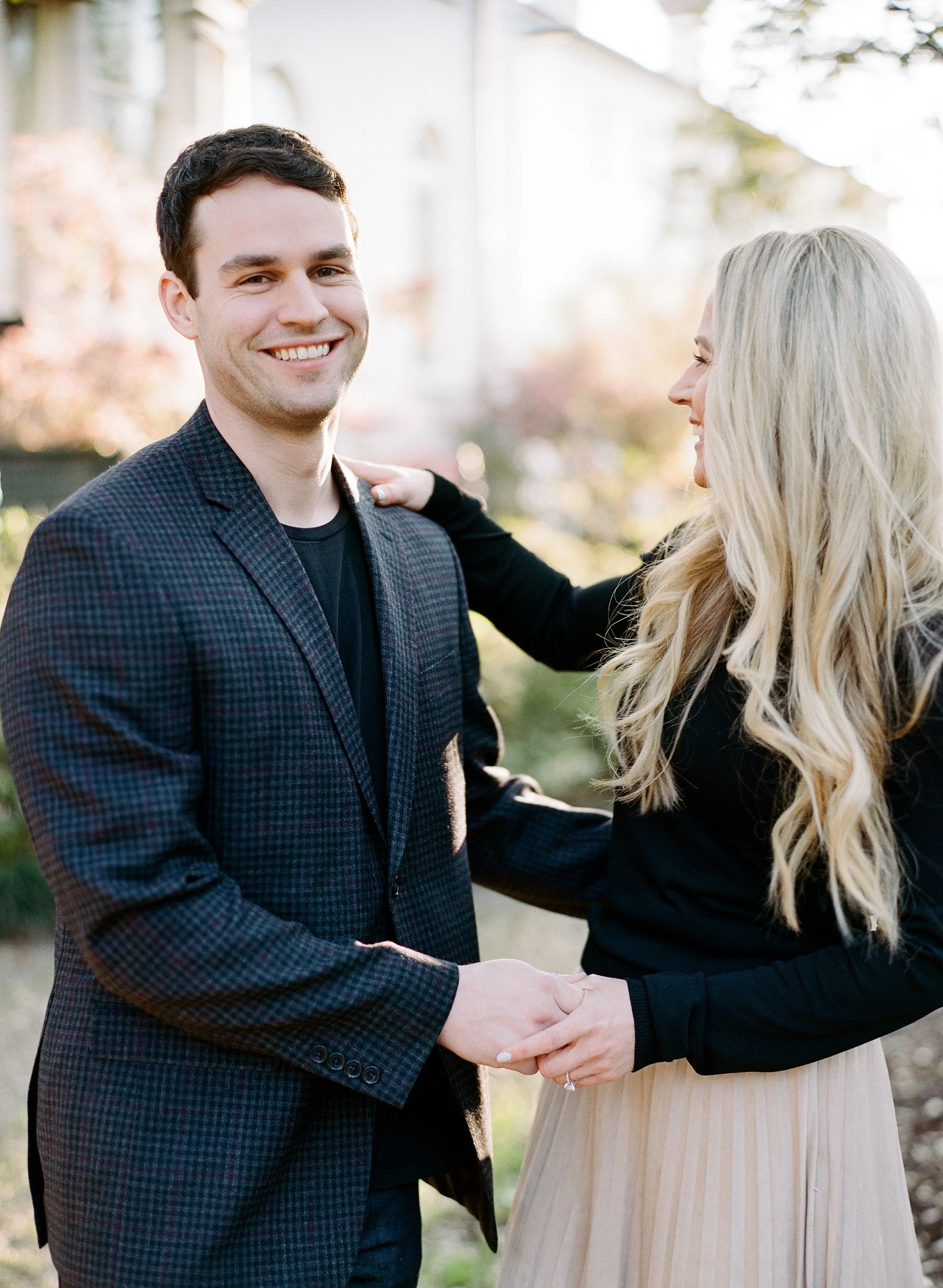

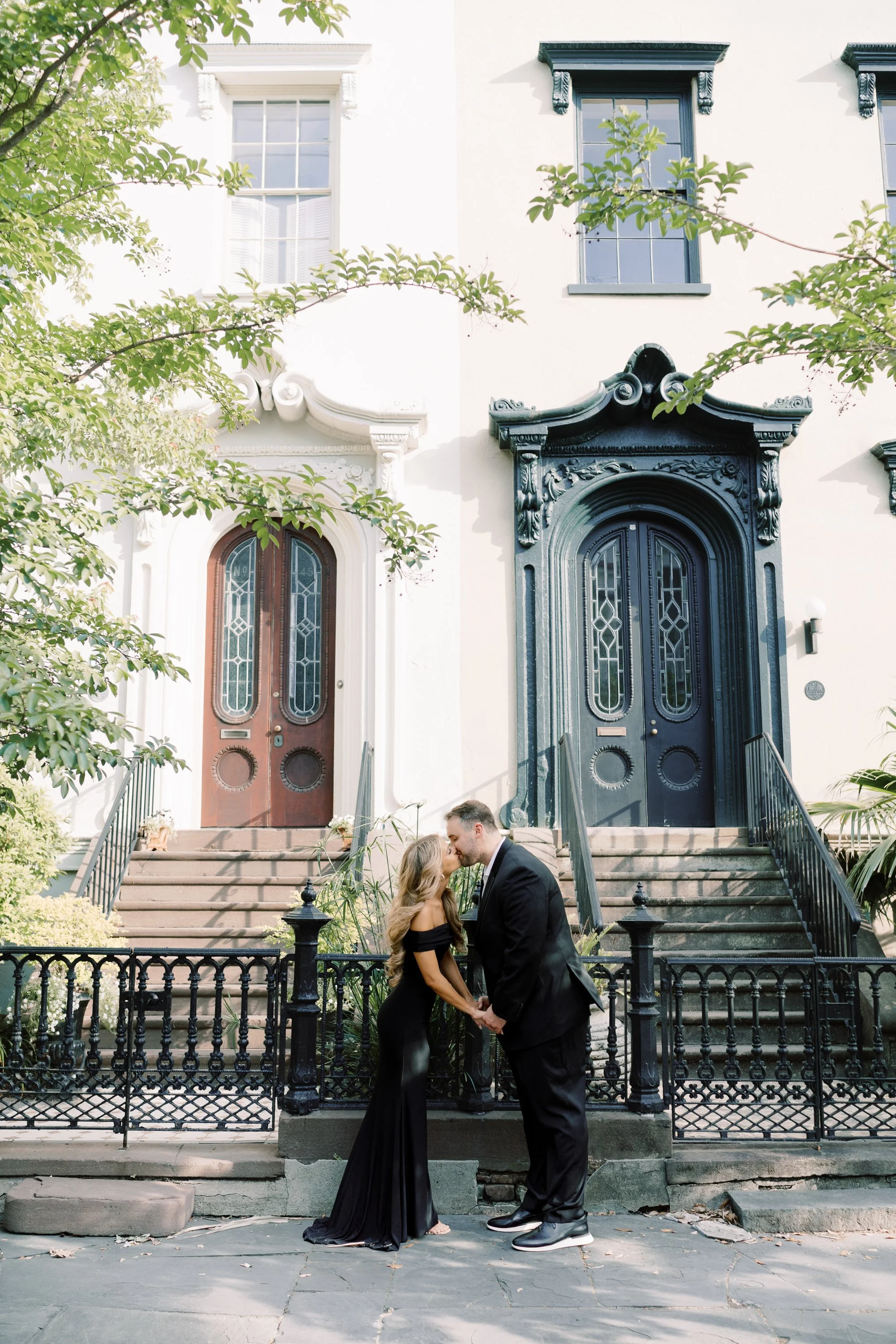
Charleston offers a rare balance of historic architecture, coastal light, and natural landscape — all within minutes of one another. From cobblestone streets and pastel homes to quiet marshes and barrier island beaches, the setting shifts quickly without ever feeling disconnected.
Choosing the right location is less about what is “popular” and more about how you want your photographs to feel. Some couples are drawn to the structure and history of downtown, while others prefer open space, water, or something more understated.
Below is a curated guide to Charleston engagement session locations, with insight into how each setting photographs and how they naturally pair together.
Top Charleston Engagement Photo Locations
South of Broad (Battery, Rainbow Row, Tradd Street)
French Quarter (Dock Street, Chalmers Street, Washington Square Park)
Broad Street & The Four Corners of Law
Hampton Park
Middleton Place
Sullivan’s Island
Isle of Palms
Kiawah Island
South of Broad
Classic, architectural, and distinctly Charleston
South of Broad is defined by narrow streets, historic homes, and ironwork that creates structure within each frame. The scale is intimate, and the details carry the image.
White Point Garden & The Battery
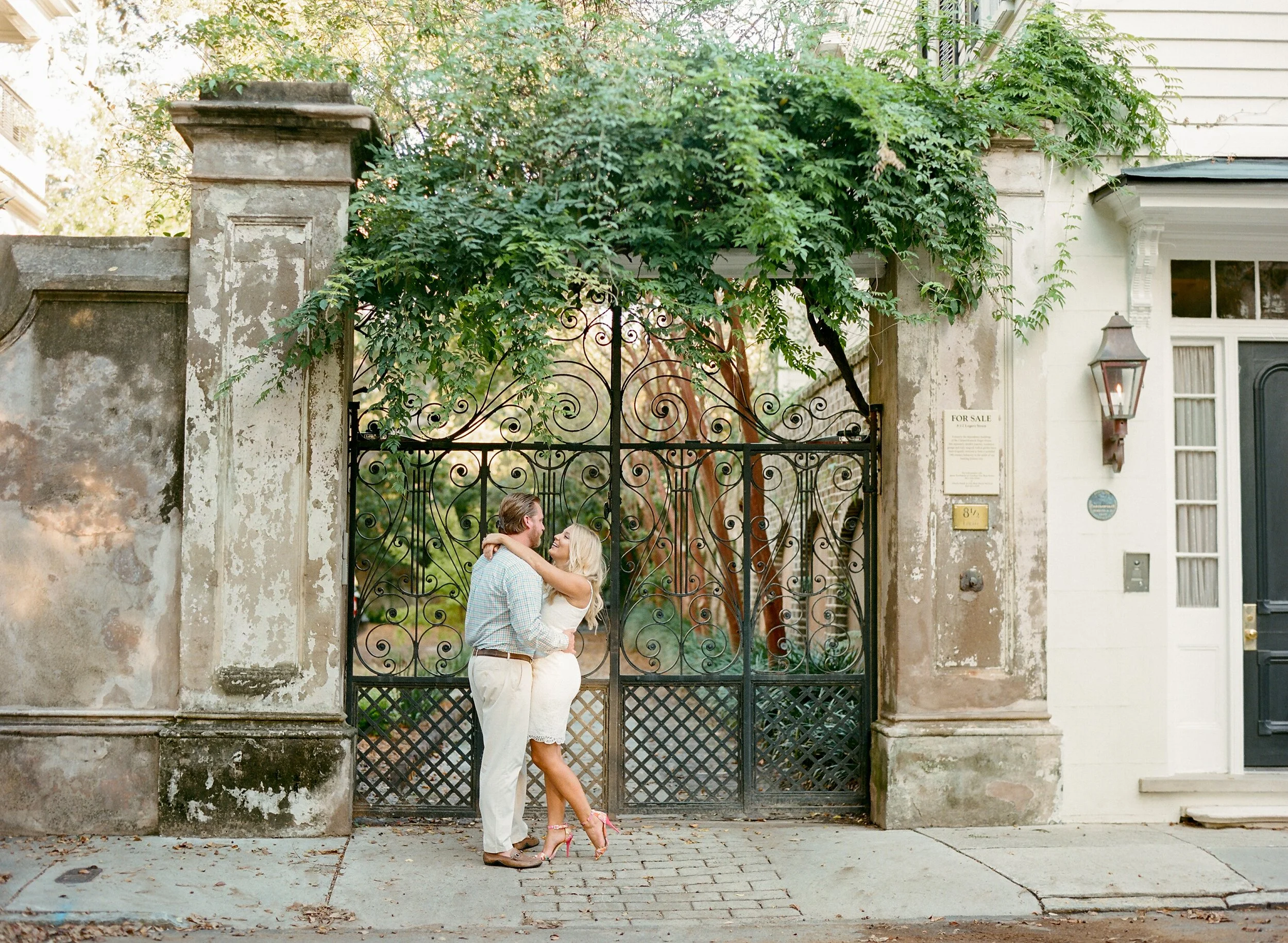
At the southern edge of the peninsula, White Point Garden is anchored by live oaks and open harbor views. The light filters through the trees in a way that naturally softens contrast, especially earlier in the day before the sun sits too high.
From there, sessions often move along East Battery and South Battery, where the architecture becomes more prominent and the waterfront opens up. Starting here and gradually moving inward allows the light and environment to evolve without interruption.
This area suits couples drawn to something rooted in Charleston’s architectural identity with a coastal edge.
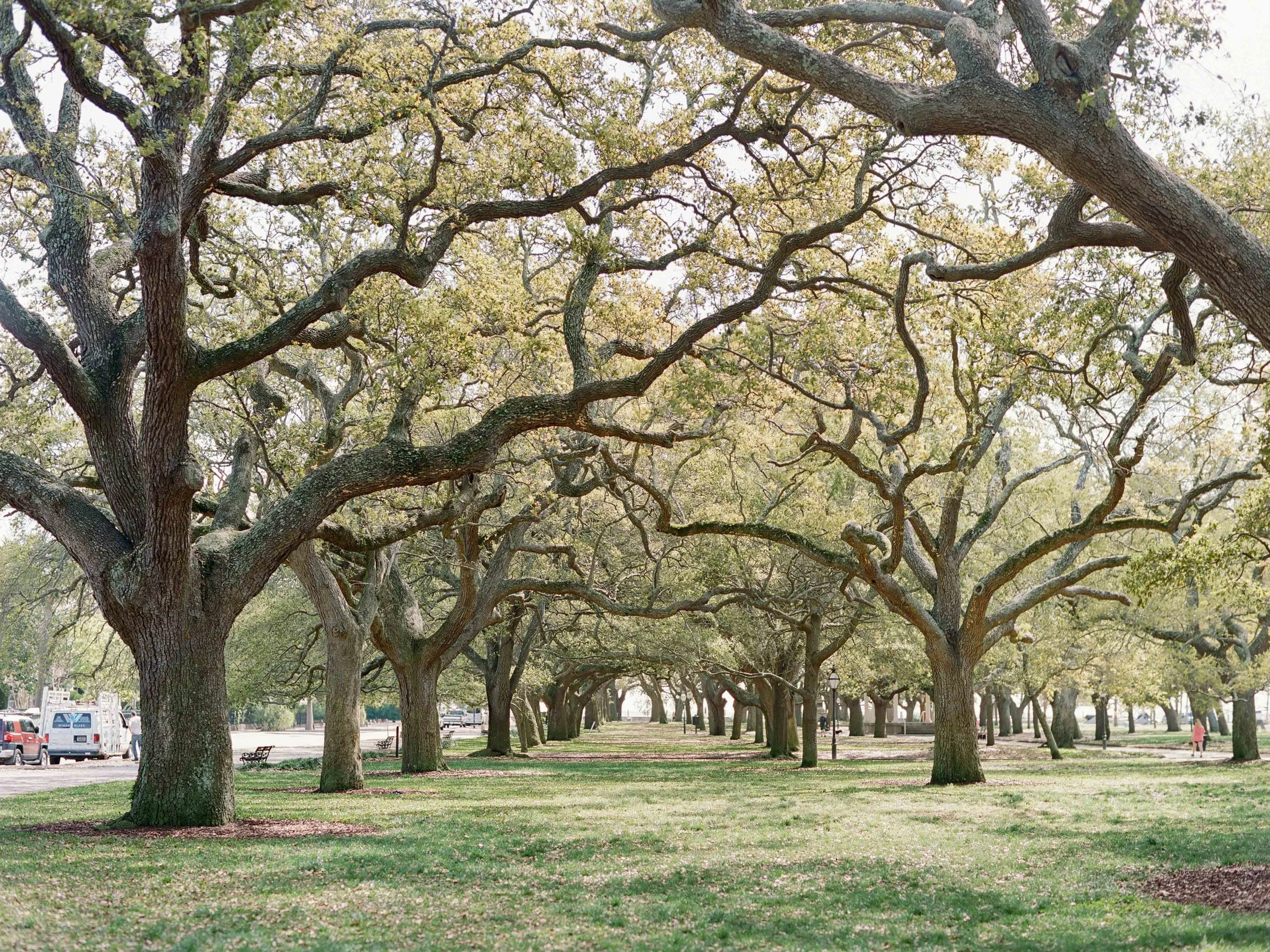
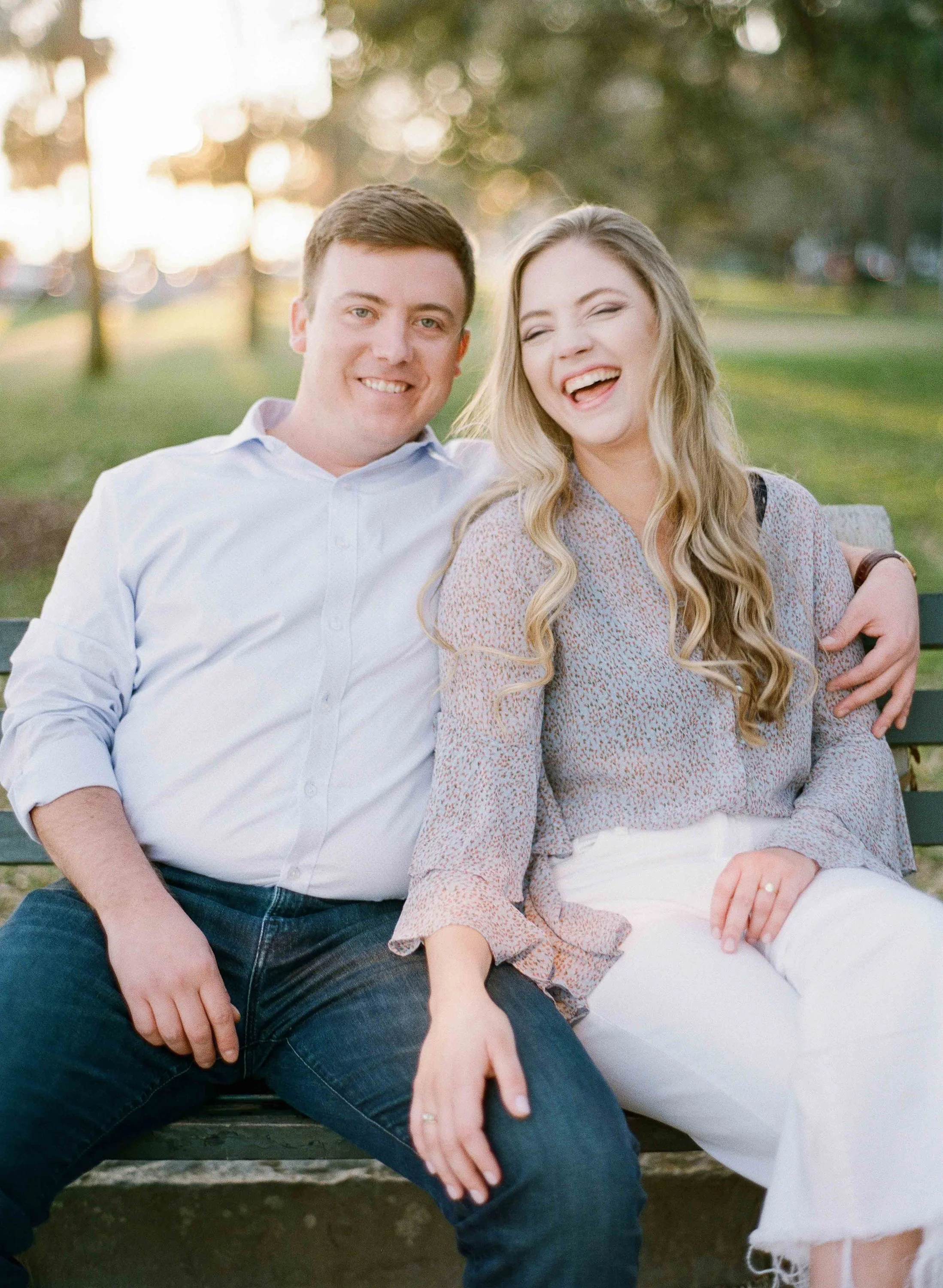
South of Broad is where Charleston feels the most composed — architecture, light, and scale working together without needing direction.
Rainbow Row
Rainbow Row introduces color in a way that still feels considered. The repetition of pastel facades, shutters, and architectural lines creates a backdrop that is both refined and composed.
Just beyond it, streets like Tradd and Church offer a similar visual language with less movement, making it easy to transition without breaking the rhythm of the session. Photographing this area earlier in the day keeps the streets quiet and the tones of the homes more true to color.
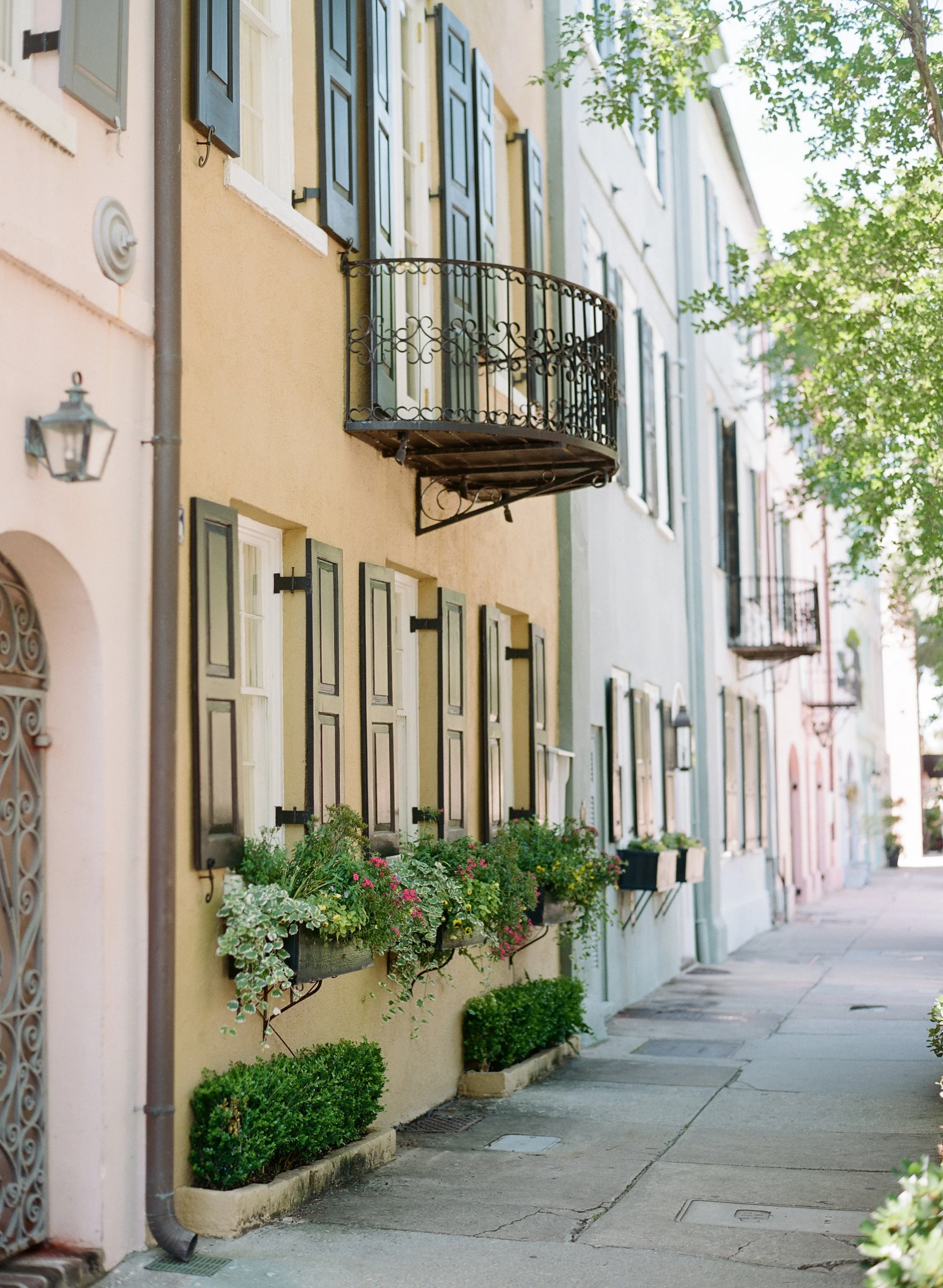
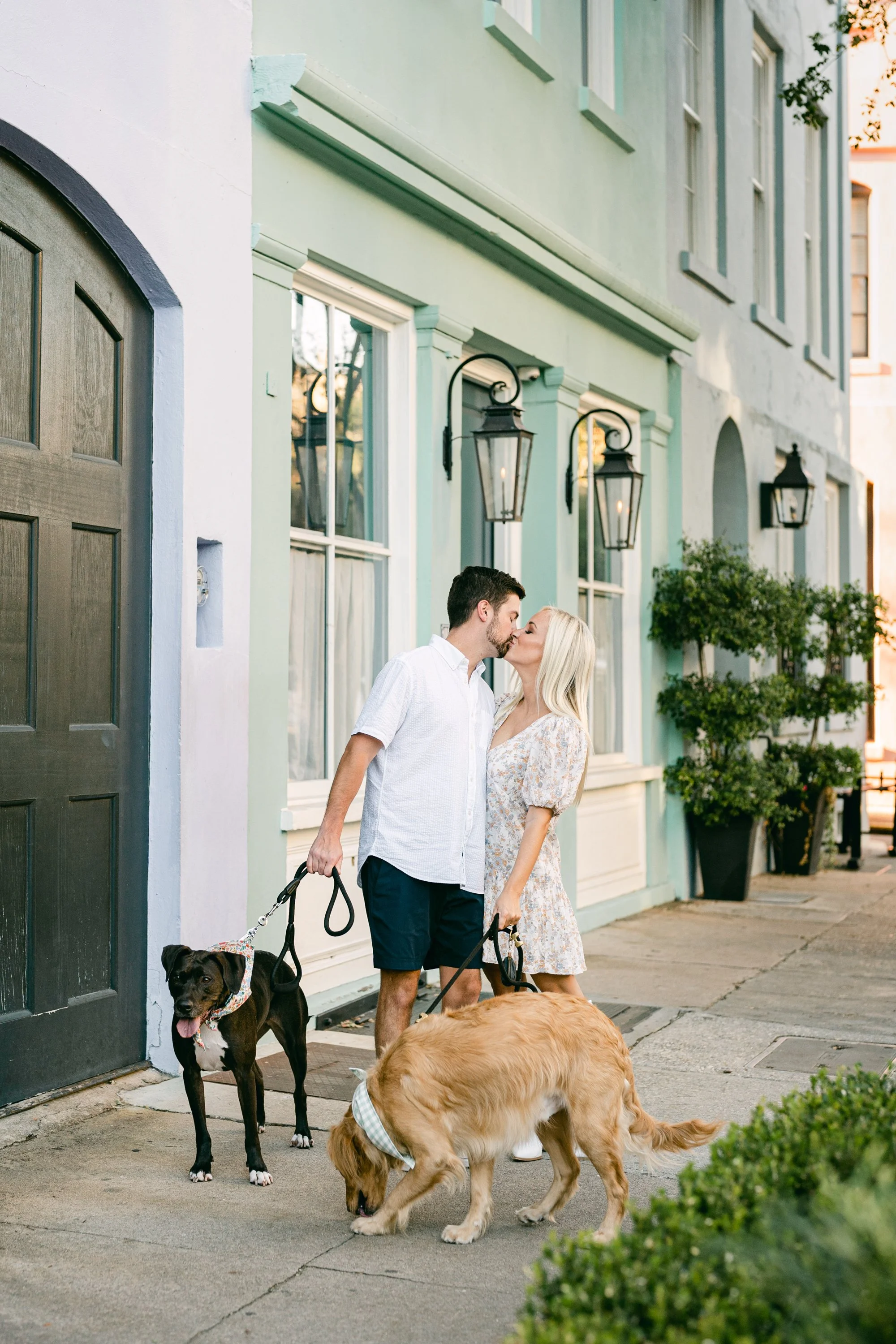
Color here is controlled rather than overwhelming — the repetition of the homes creates structure, not distraction.
The French Quarter
The French Quarter feels more enclosed than other parts of downtown, which allows texture and detail to take priority. The streets are narrower, the light moves differently, and the environment carries a quieter presence.
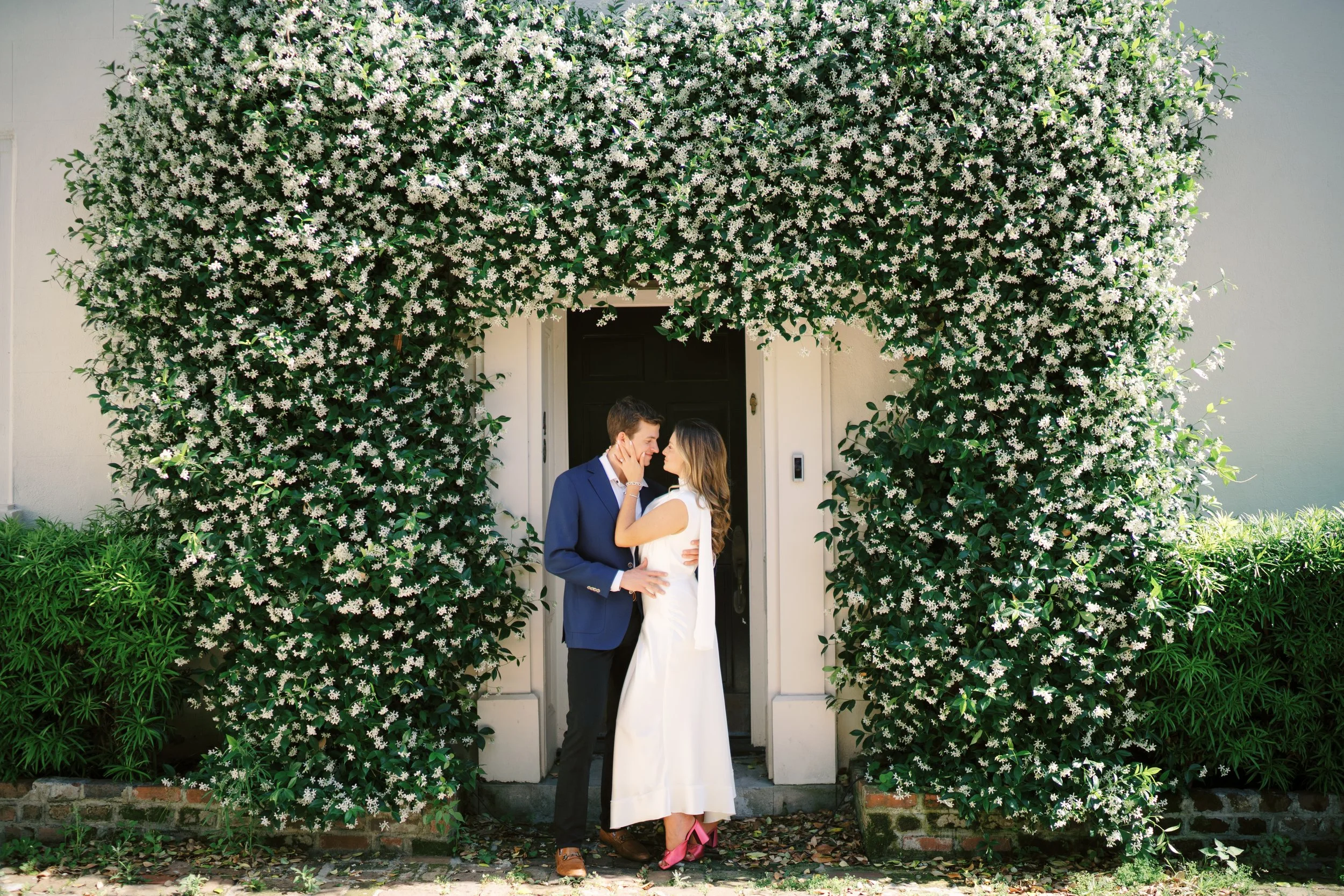
This part of the city feels quieter by design — the scale shifts, and the details begin to carry the frame.
Dock Street Theatre, St. Philip’s Church & Queen Street
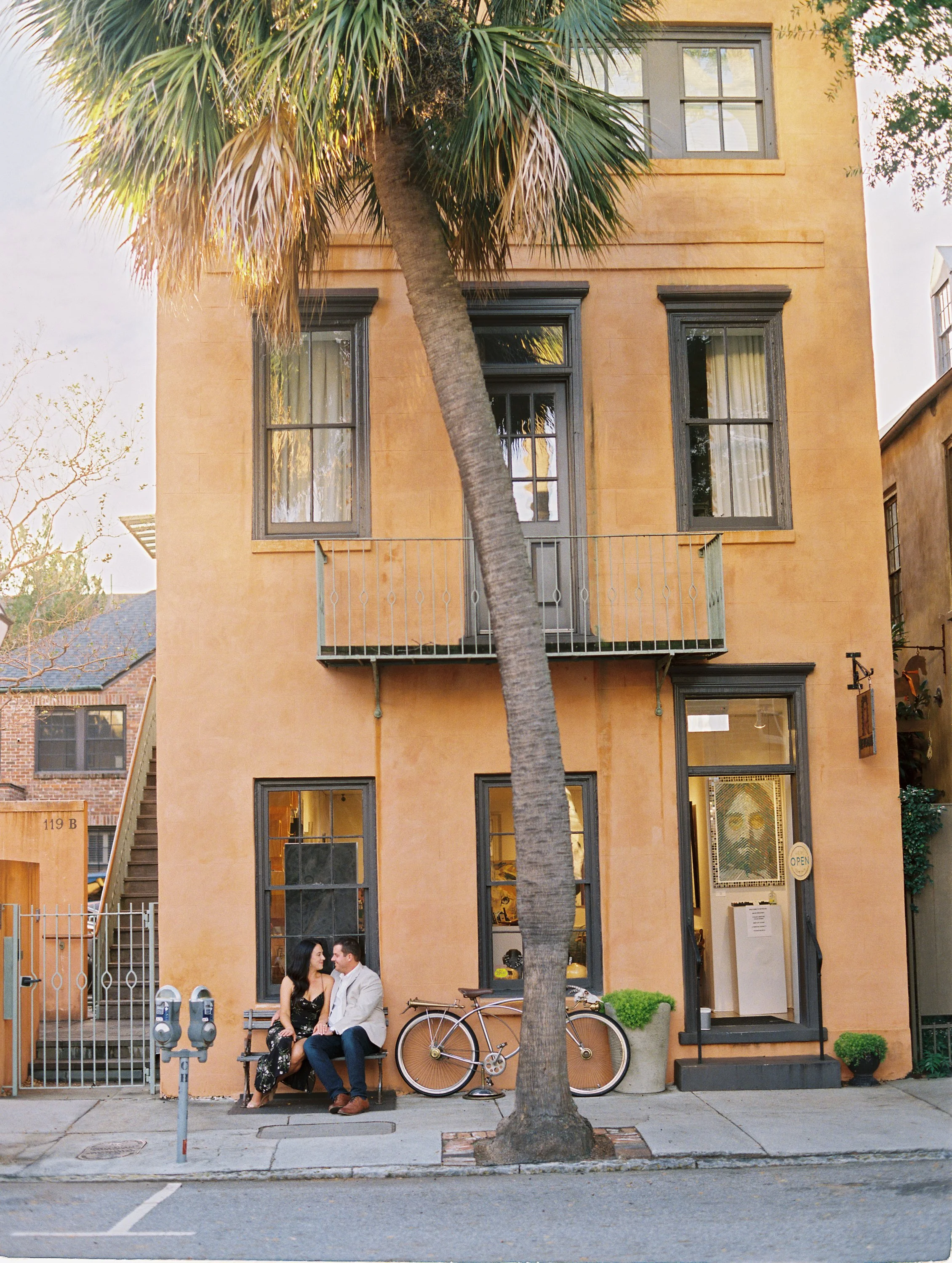
Within a few blocks, the architecture shifts between soft color and vertical structure. Dock Street Theatre offers a more muted palette, while St. Philip’s Church introduces scale and contrast. Queen Street brings in residential detail that balances both.
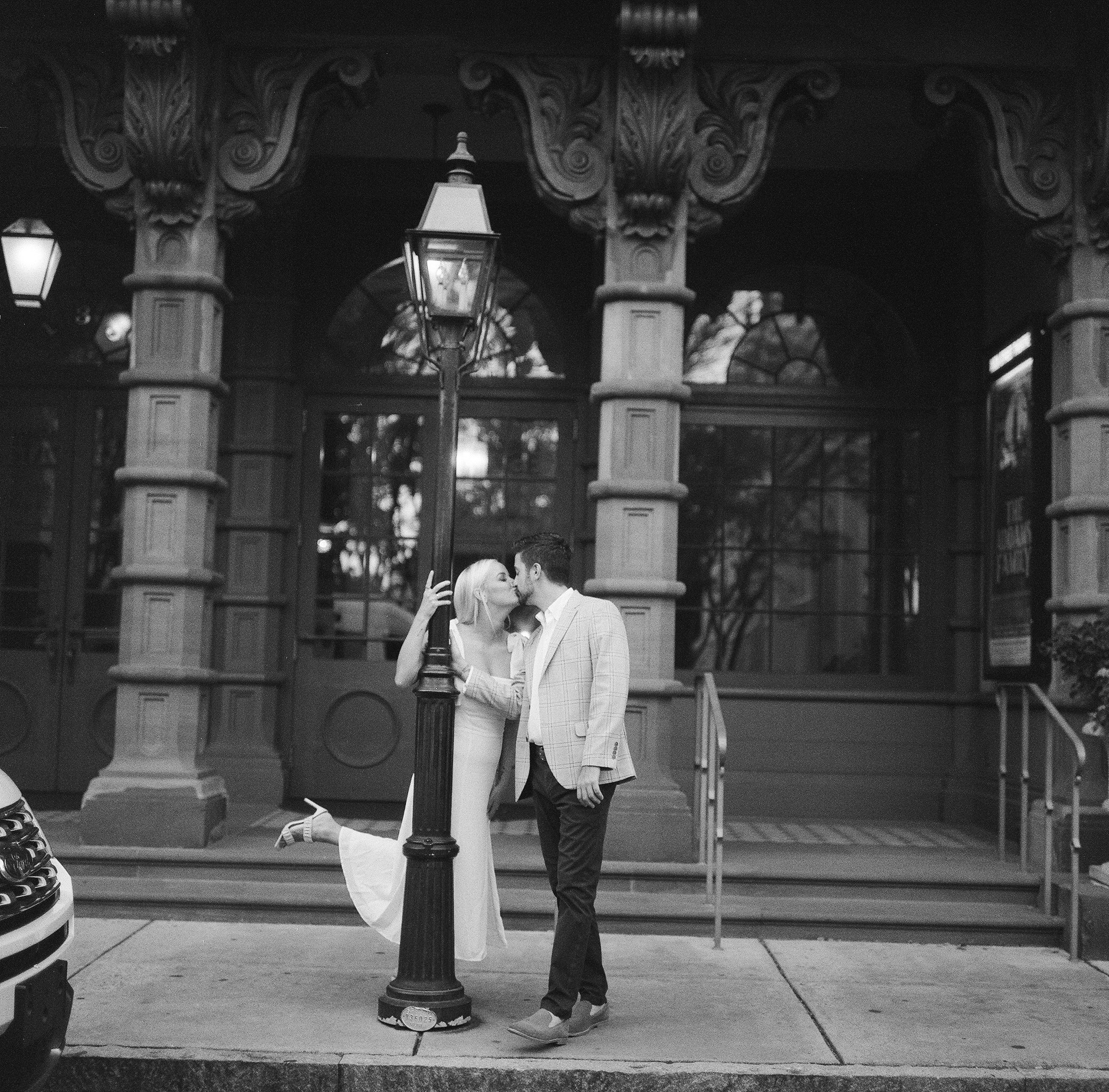
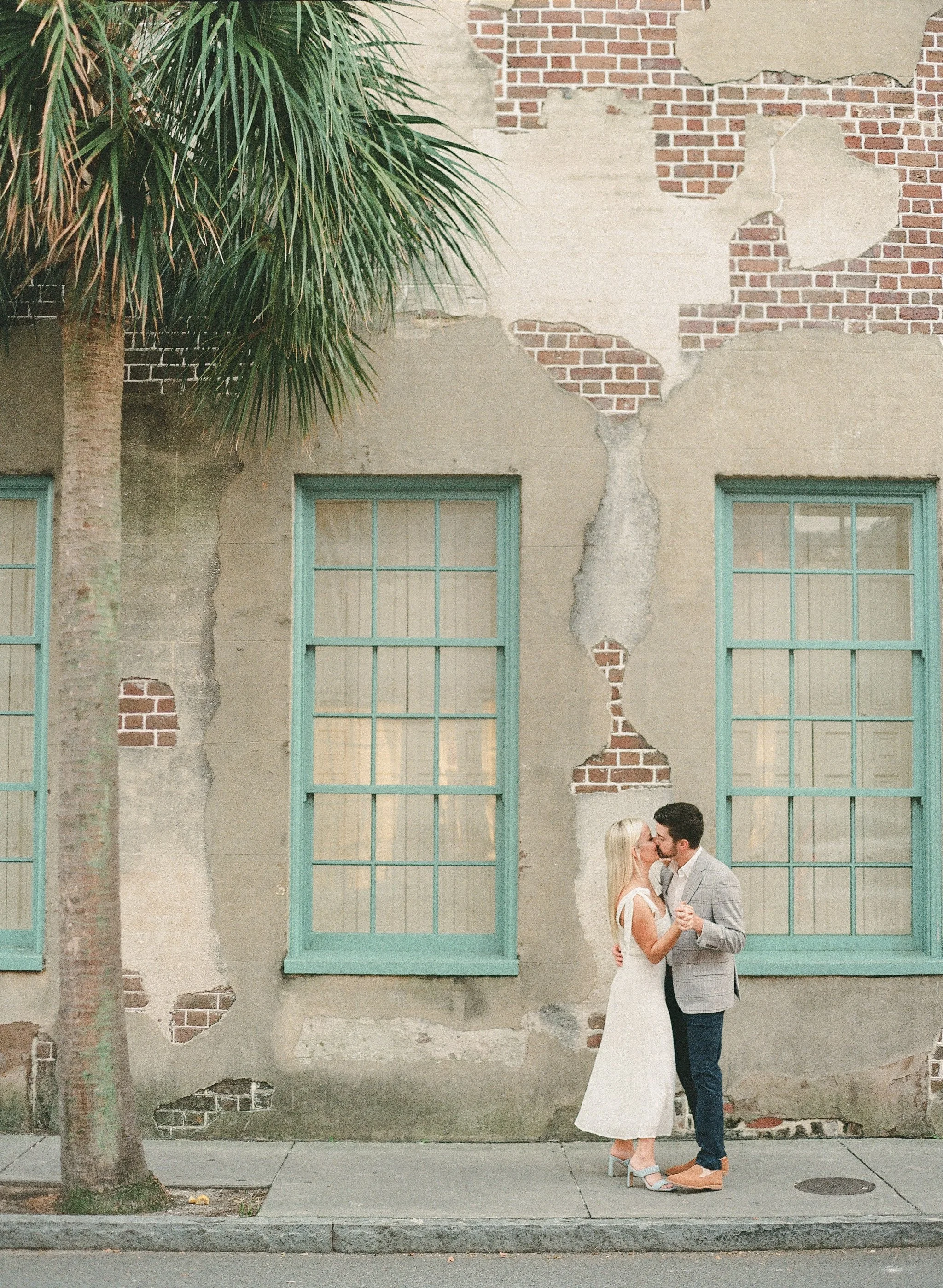
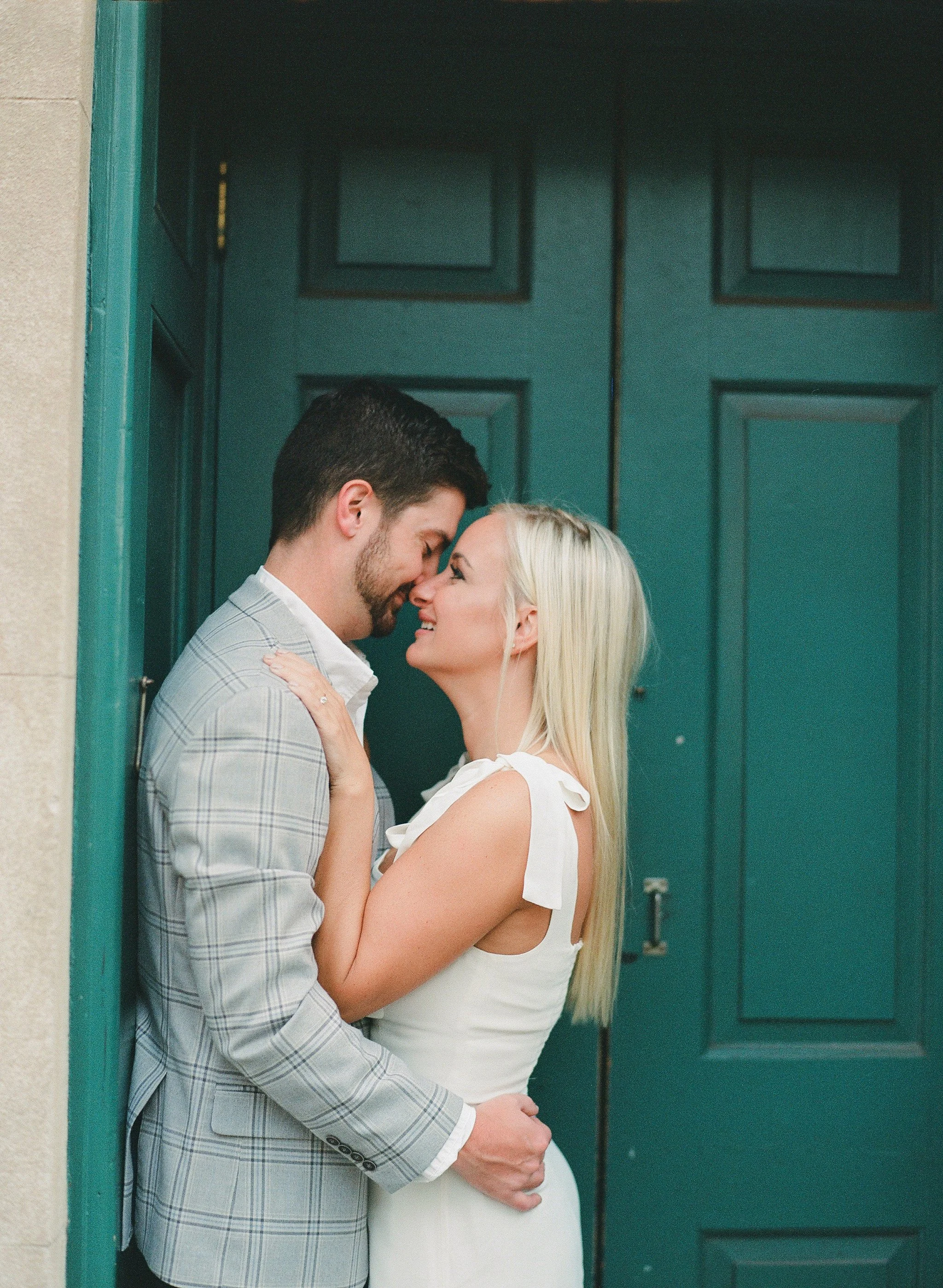
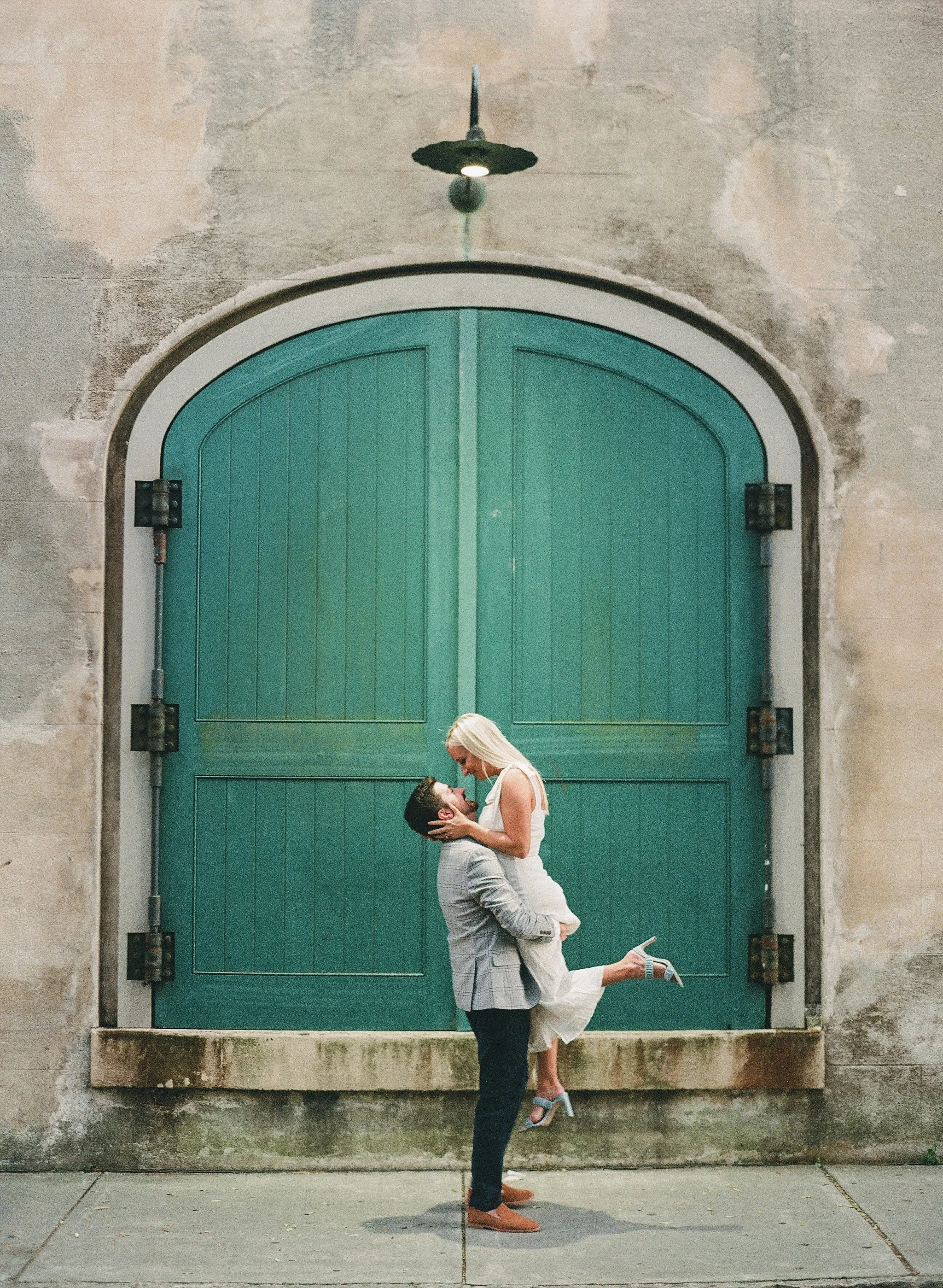
Tucked just off Broad Street, St. Michael’s Alley offers a more hidden, textural backdrop with layered brick, ironwork, and softer light that feels slightly removed from the main streets. Nearby, Longitude Lane and Bedon’s Alley introduce quieter, tucked-away streets that feel more intimate and less traveled, while still holding the same historic character.
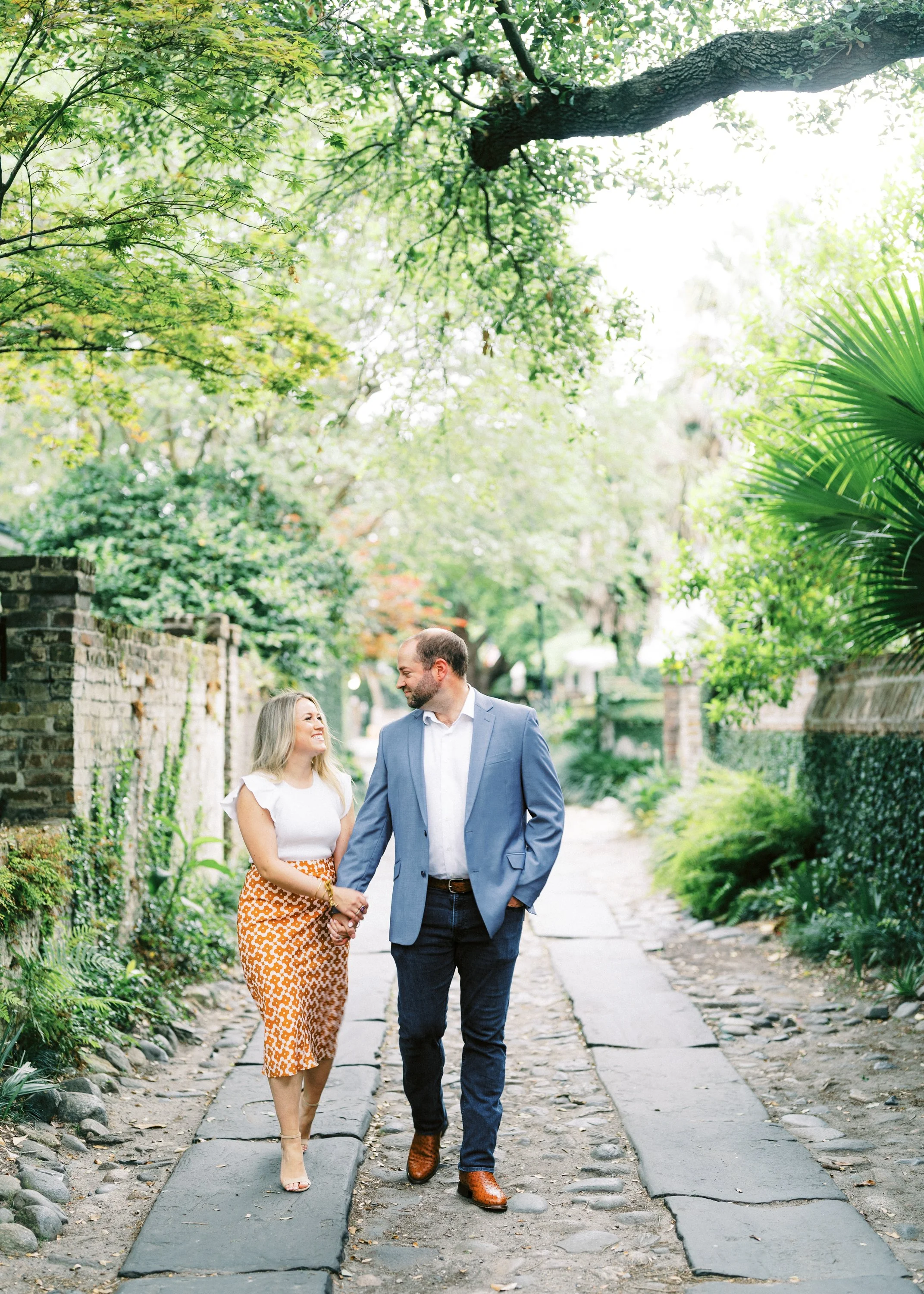
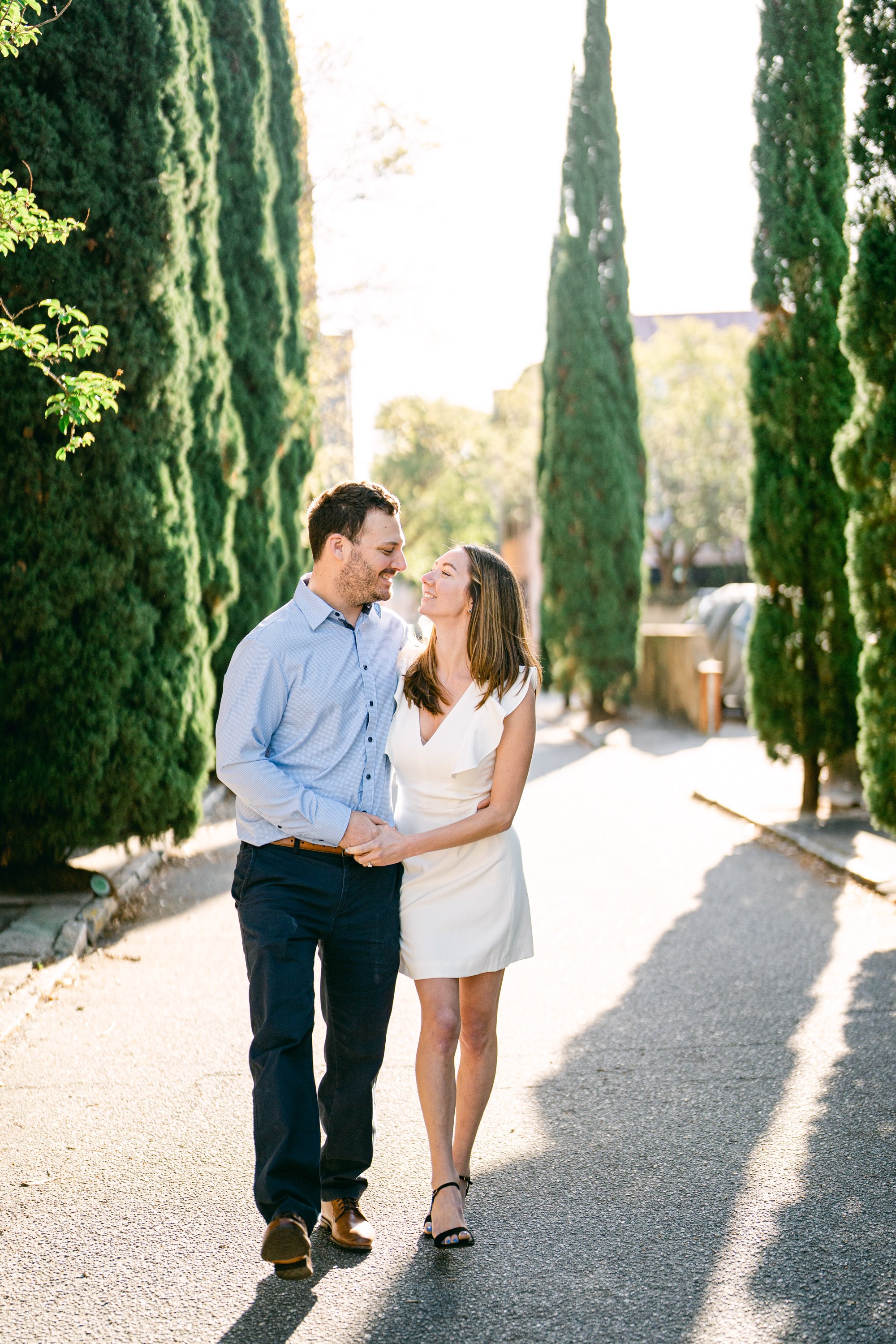
Washington Square Park & Chalmers Street
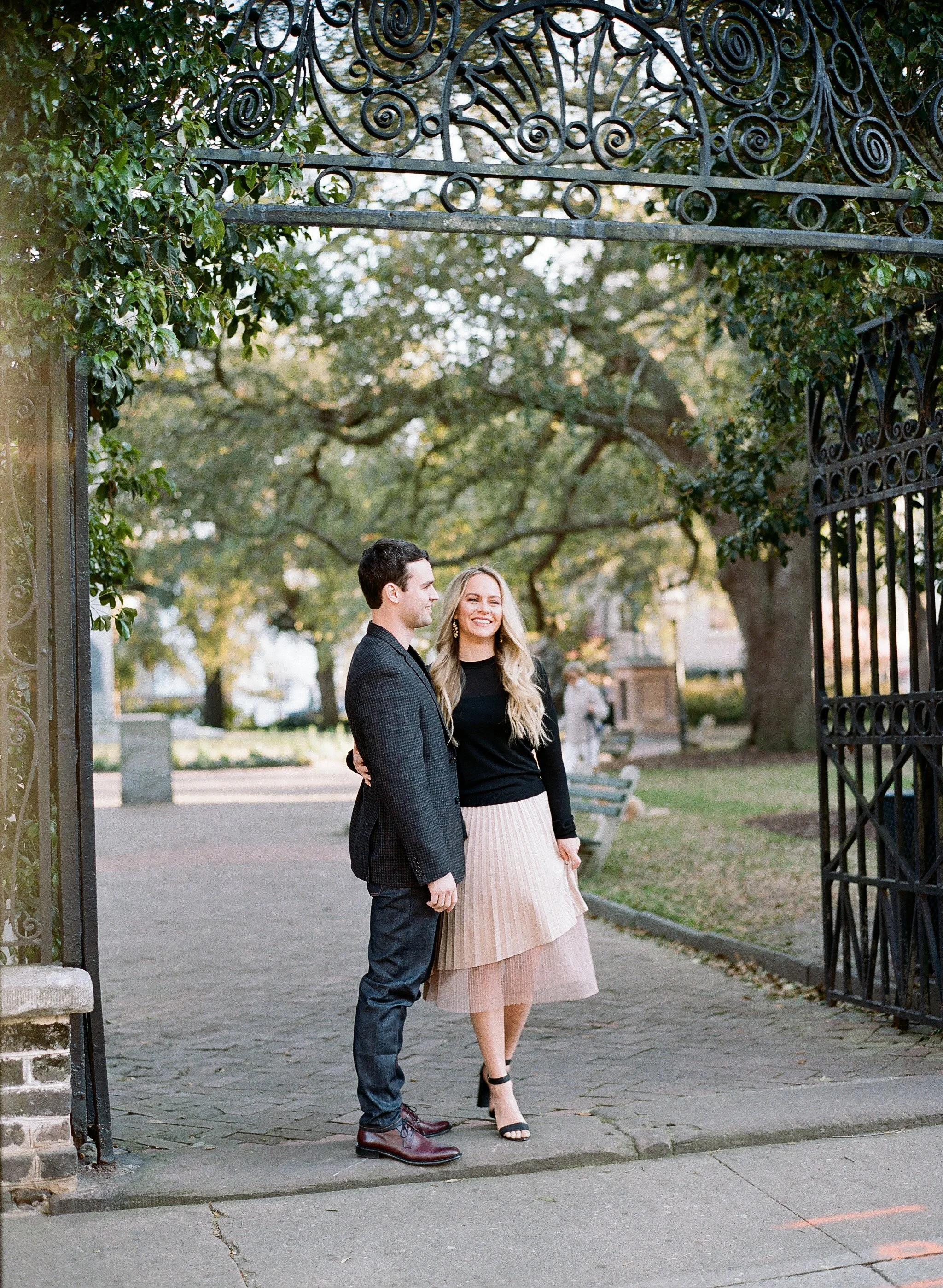
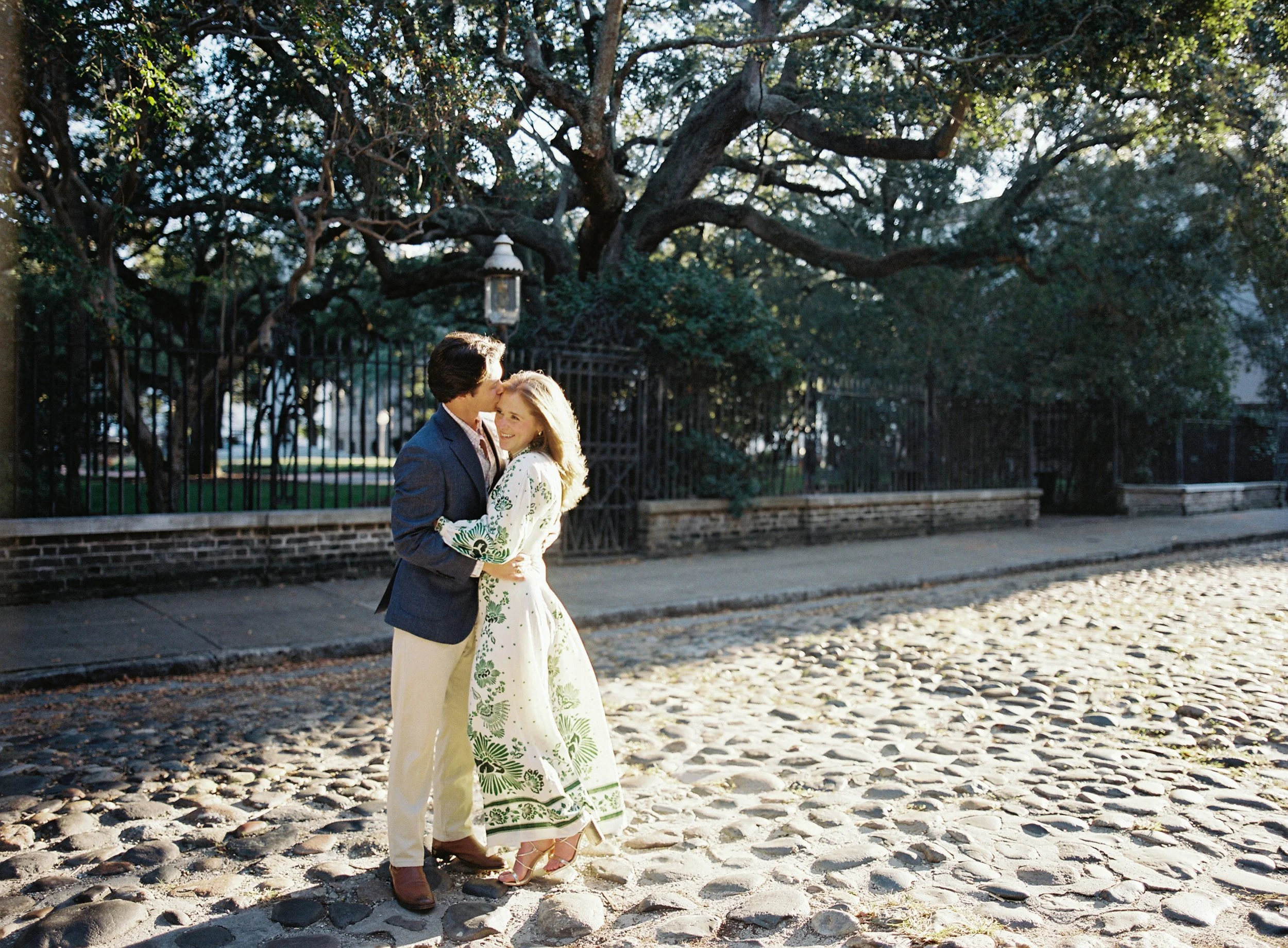
Washington Square Park provides a contained green space framed by historic buildings, offering a visual pause within the surrounding streets.
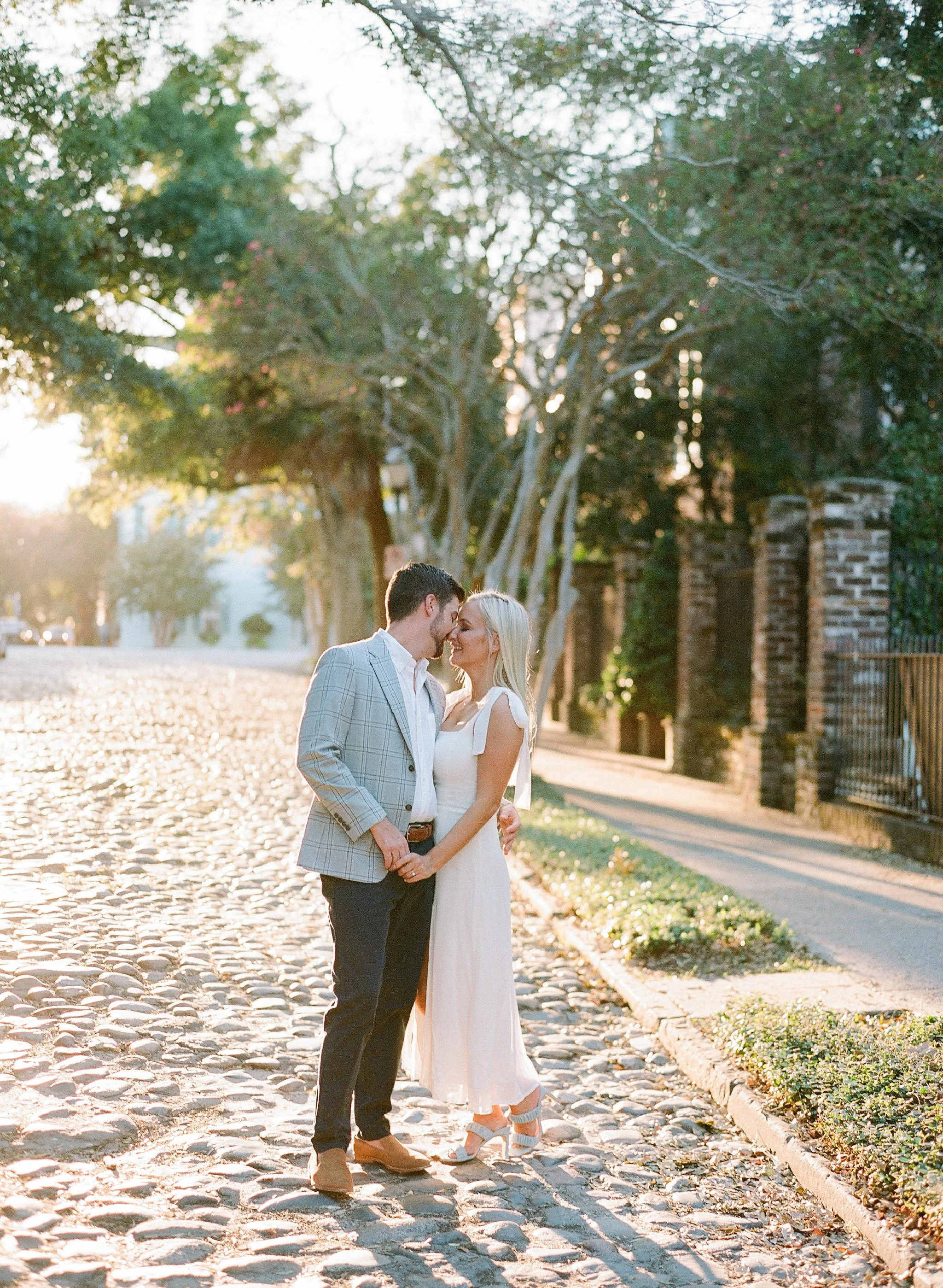
A short walk away, Chalmers Street introduces cobblestone and depth. The texture becomes more pronounced as the light lowers, which is why this area tends to photograph best later in the session rather than at the start.
Cobblestone changes everything — it grounds the image and introduces texture that can’t be replicated elsewhere in the city.
Broad Street & The Four Corners of Law
This is where Charleston becomes architectural — the lines are stronger, and the composition becomes more intentional.
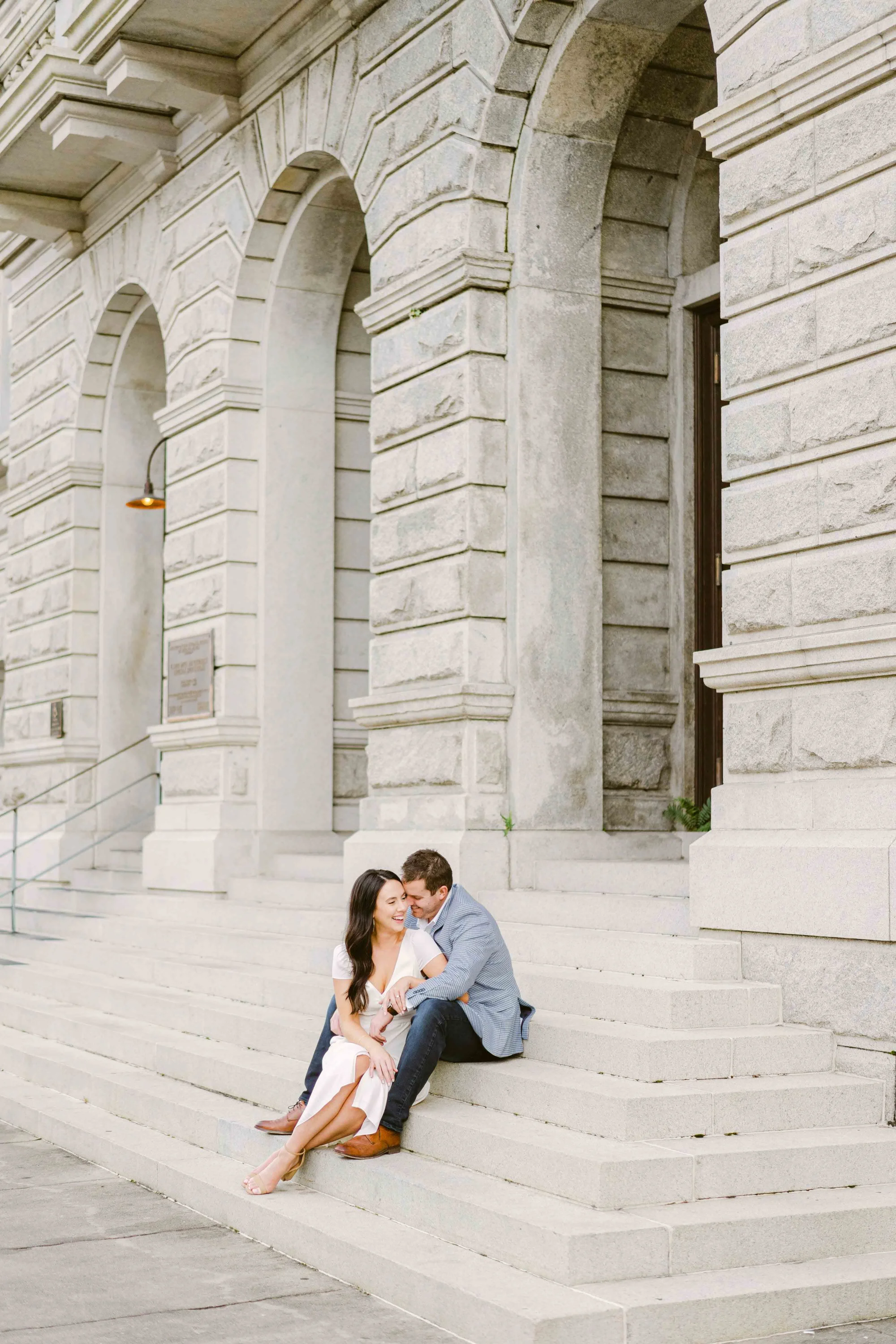
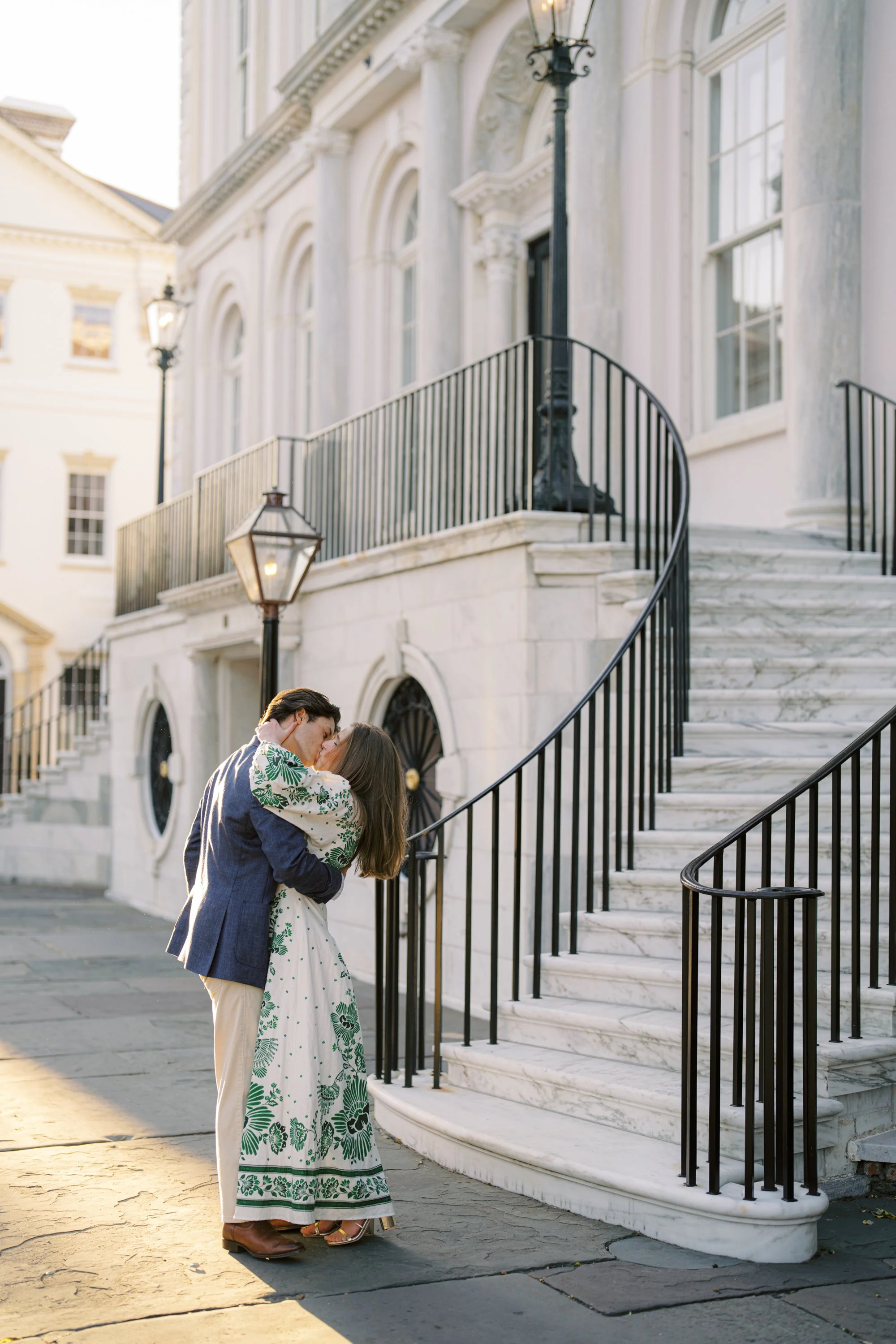
Broad Street shifts the scale entirely. The architecture is more defined, the lines are stronger, and the overall feel becomes more composed.
At the Four Corners of Law, Charleston City Hall, the Post Office, the courthouse, and St. Michael’s Church create a setting that feels intentional without needing much movement. Keeping the direction minimal here allows the architecture to carry the frame.
This area pairs naturally with the French Quarter, where the contrast between structure and softness becomes more apparent.
Charleston Parks & Gardens
Hampton Park
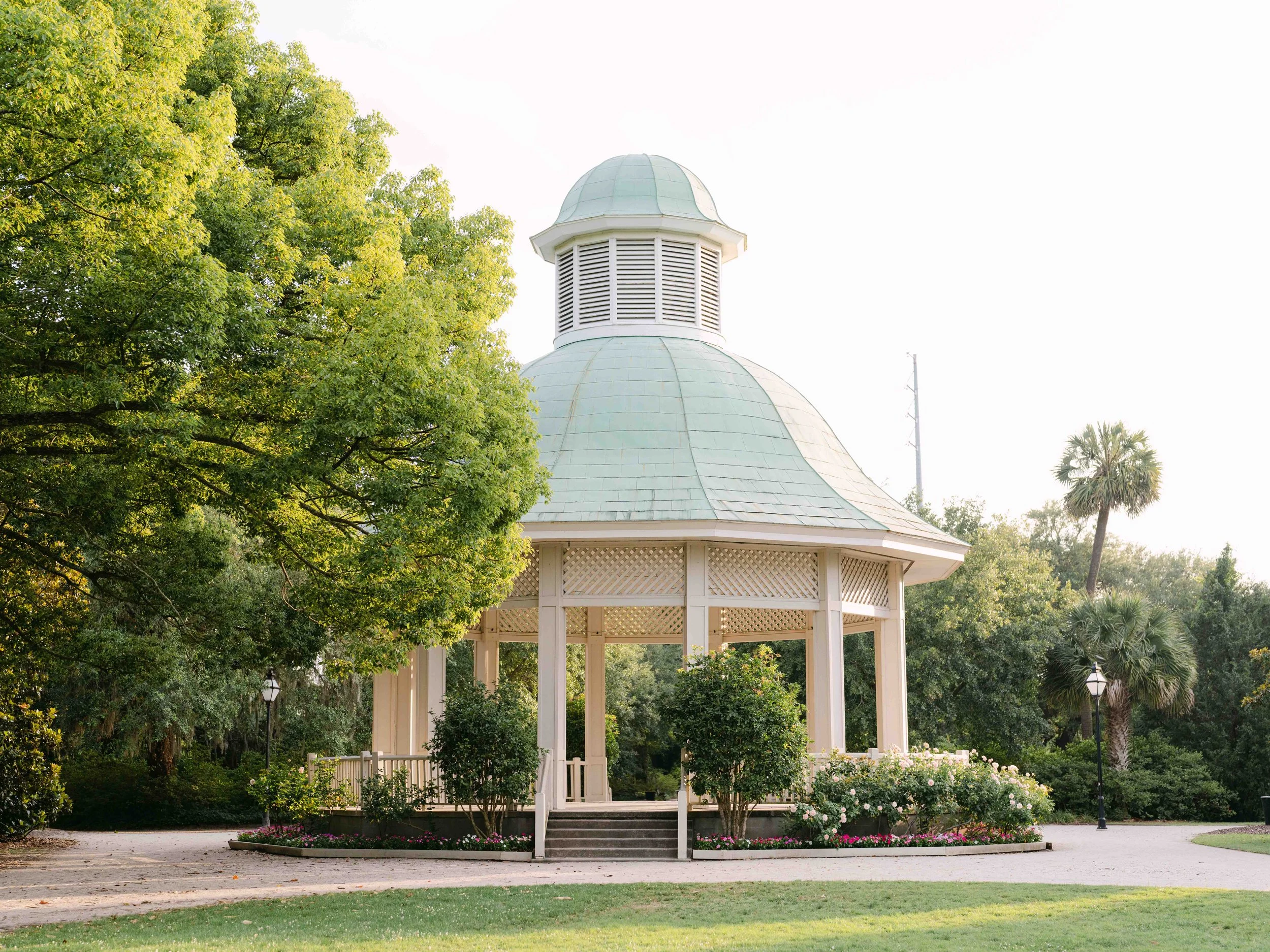
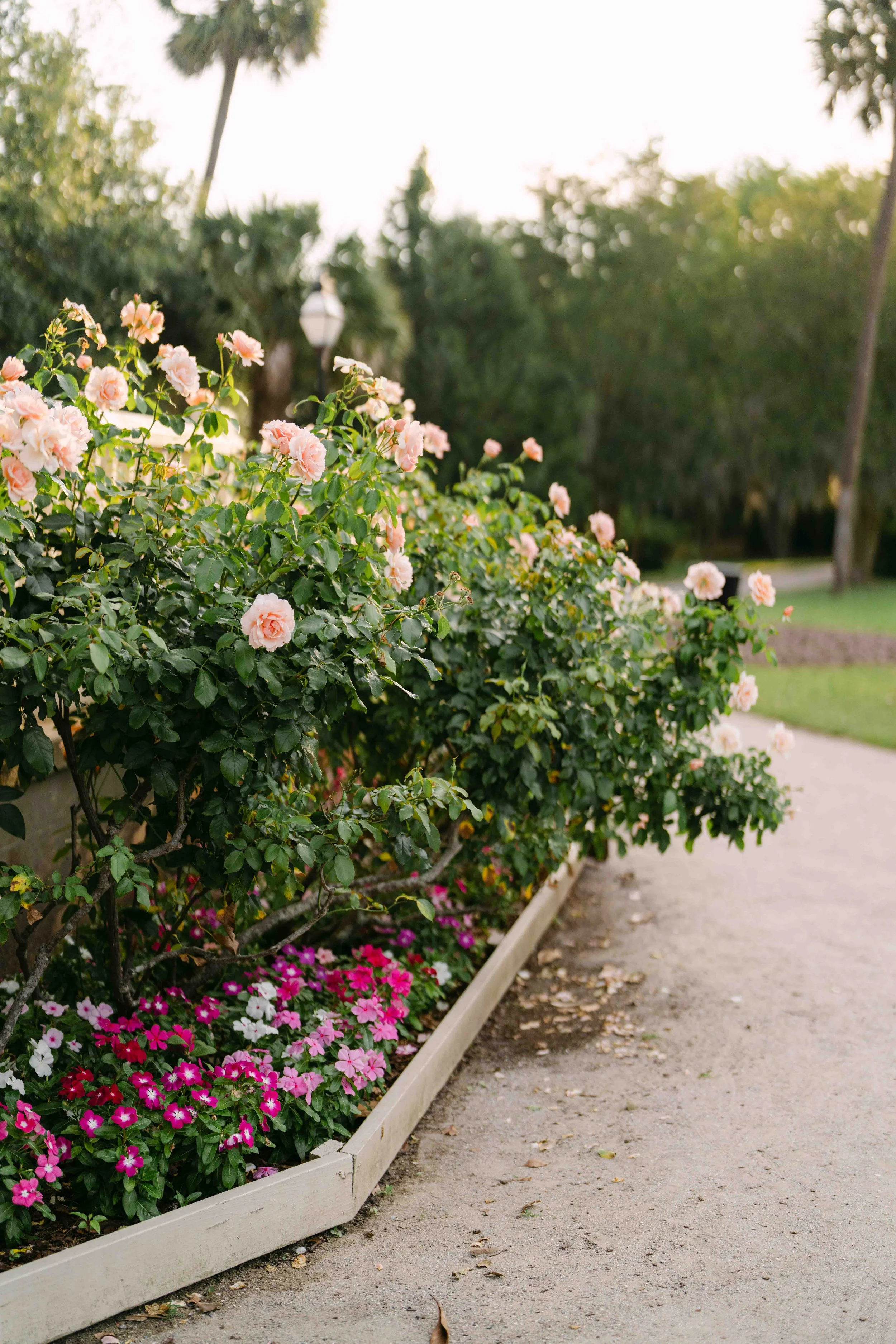
Hampton Park removes the architectural element and replaces it with space. Wide paths, oak-lined walkways, and seasonal blooms create a more open composition.
Moving toward the interior of the park tends to offer cleaner backgrounds and more consistent light, especially when avoiding the main entrances.
Middleton Place
Middleton Place is structured around symmetry. Formal gardens, water features, and long sightlines create a controlled, balanced environment.
The light across the water shifts quickly depending on the time of day, so the sequence of where the session begins and ends matters here more than most locations.
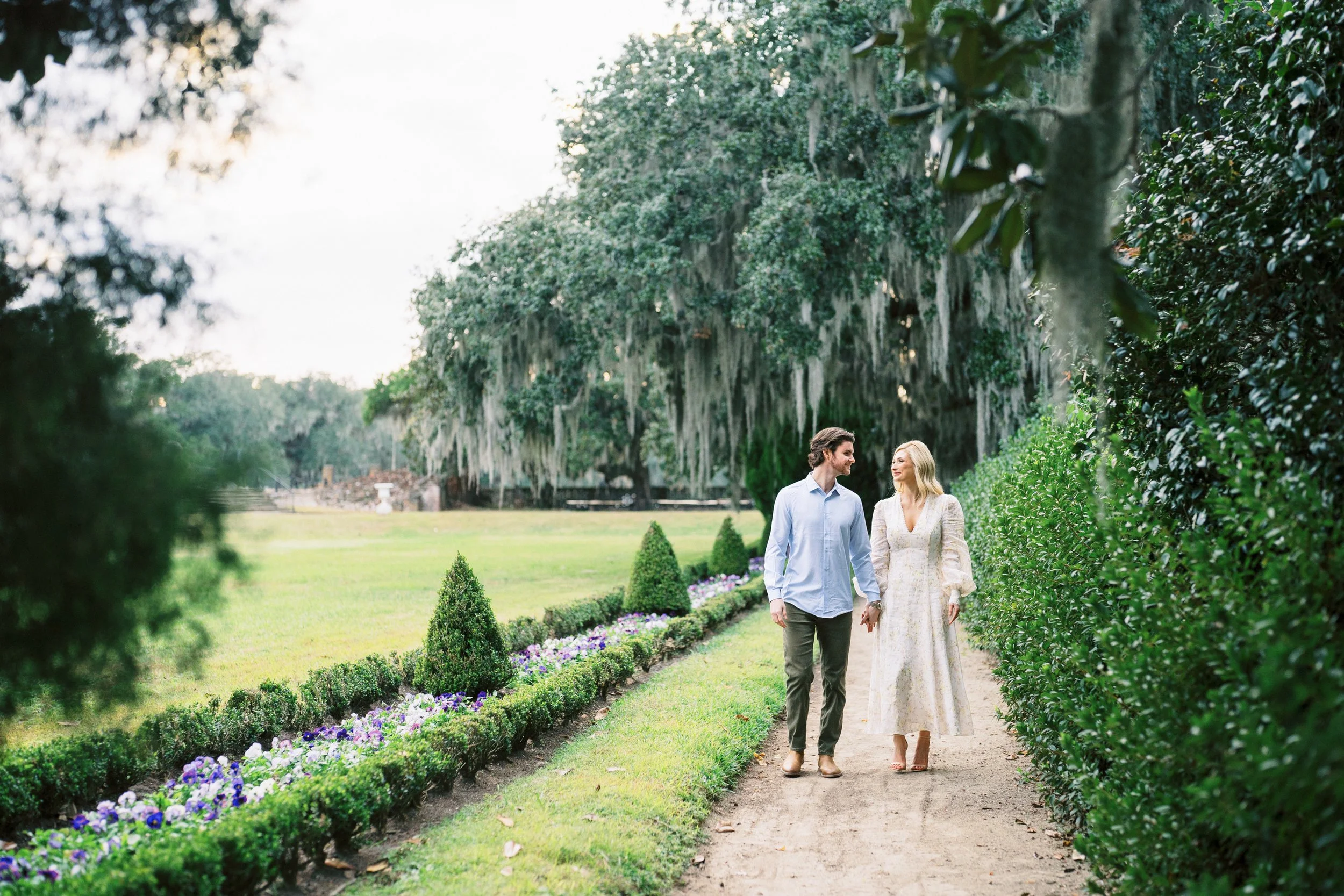
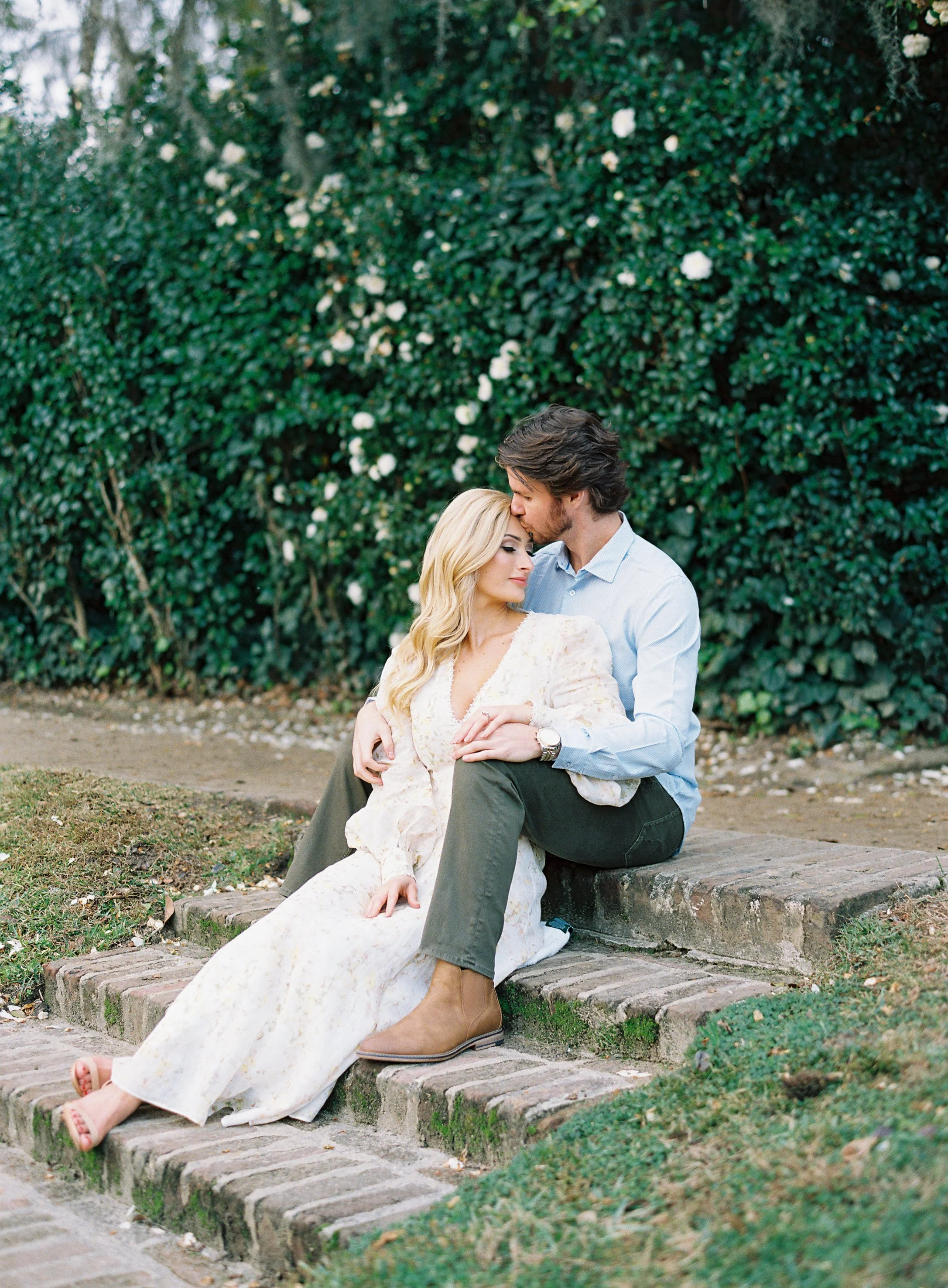
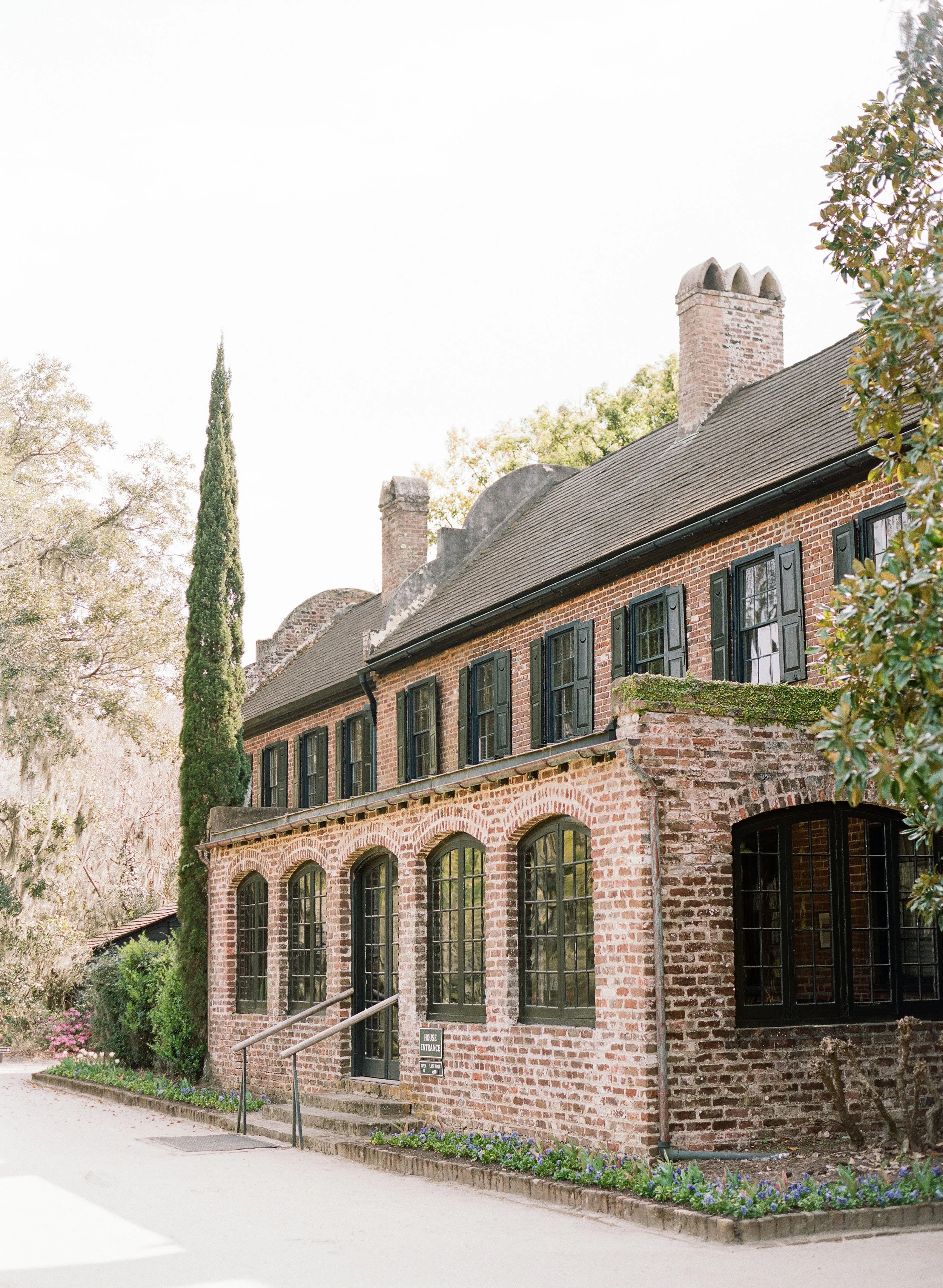
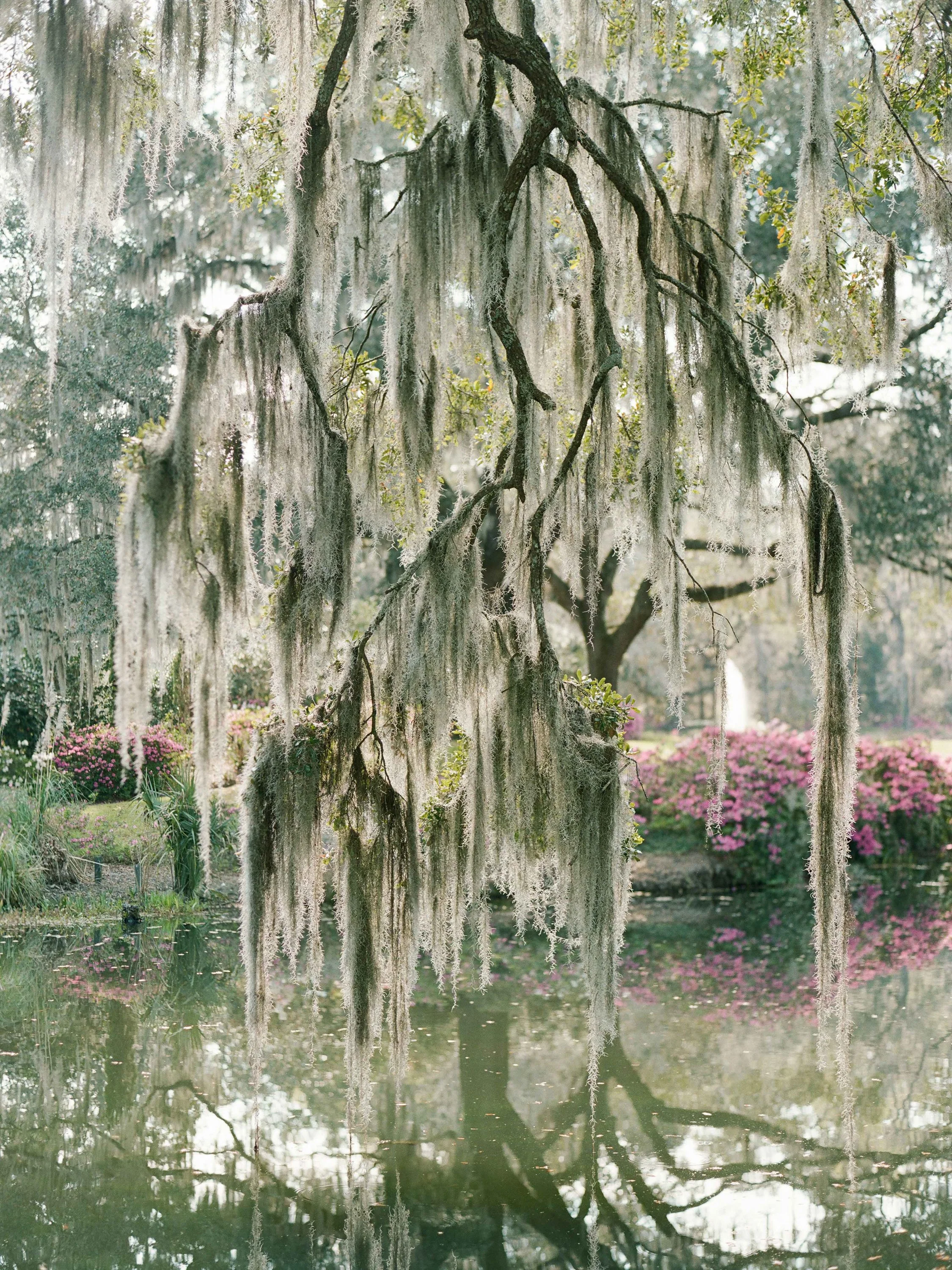
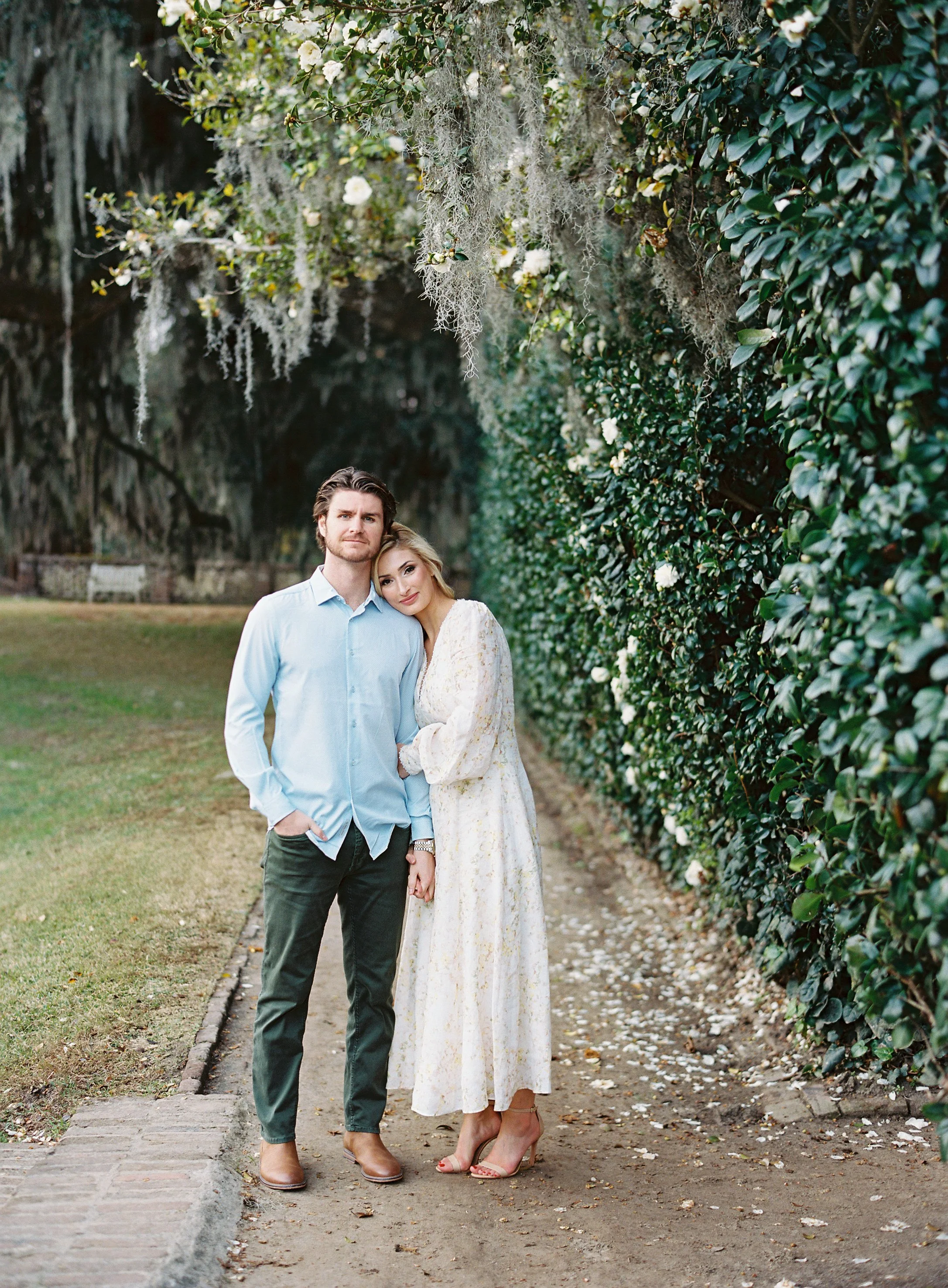
Everything here is built on symmetry — the balance in the landscape naturally carries into the photograph.
Waterfront & Coastal Locations
Pitt Street Bridge
Located in the Old Village of Mount Pleasant, Pitt Street Bridge offers open views of the harbor and surrounding marsh.
The walkway extends into the water, creating space and light that feels distinctly Lowcountry. Sunset here is especially beautiful.
Arriving just before sunset gives enough time to move through the space as the light changes, rather than trying to compress everything into a single moment.
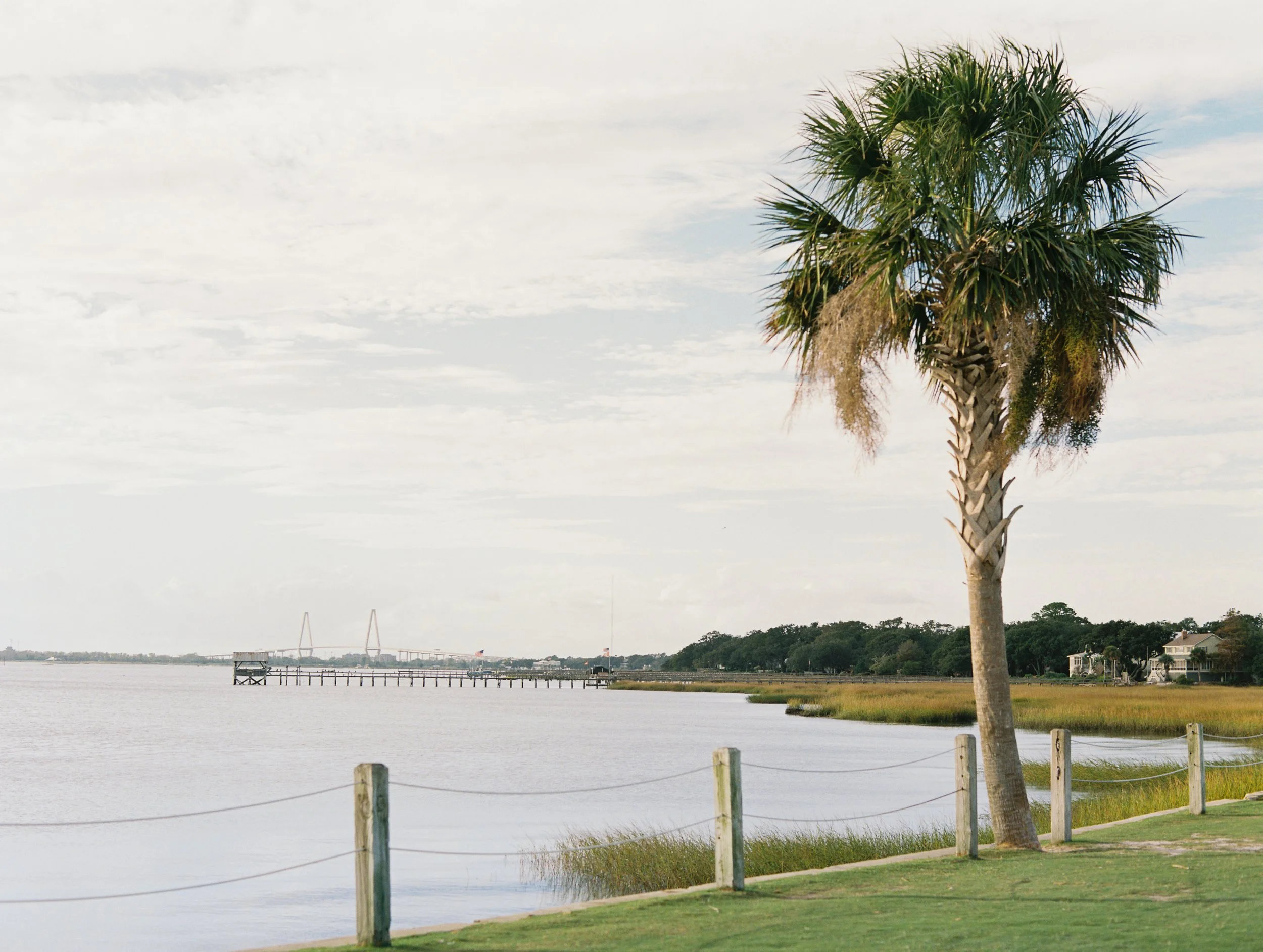
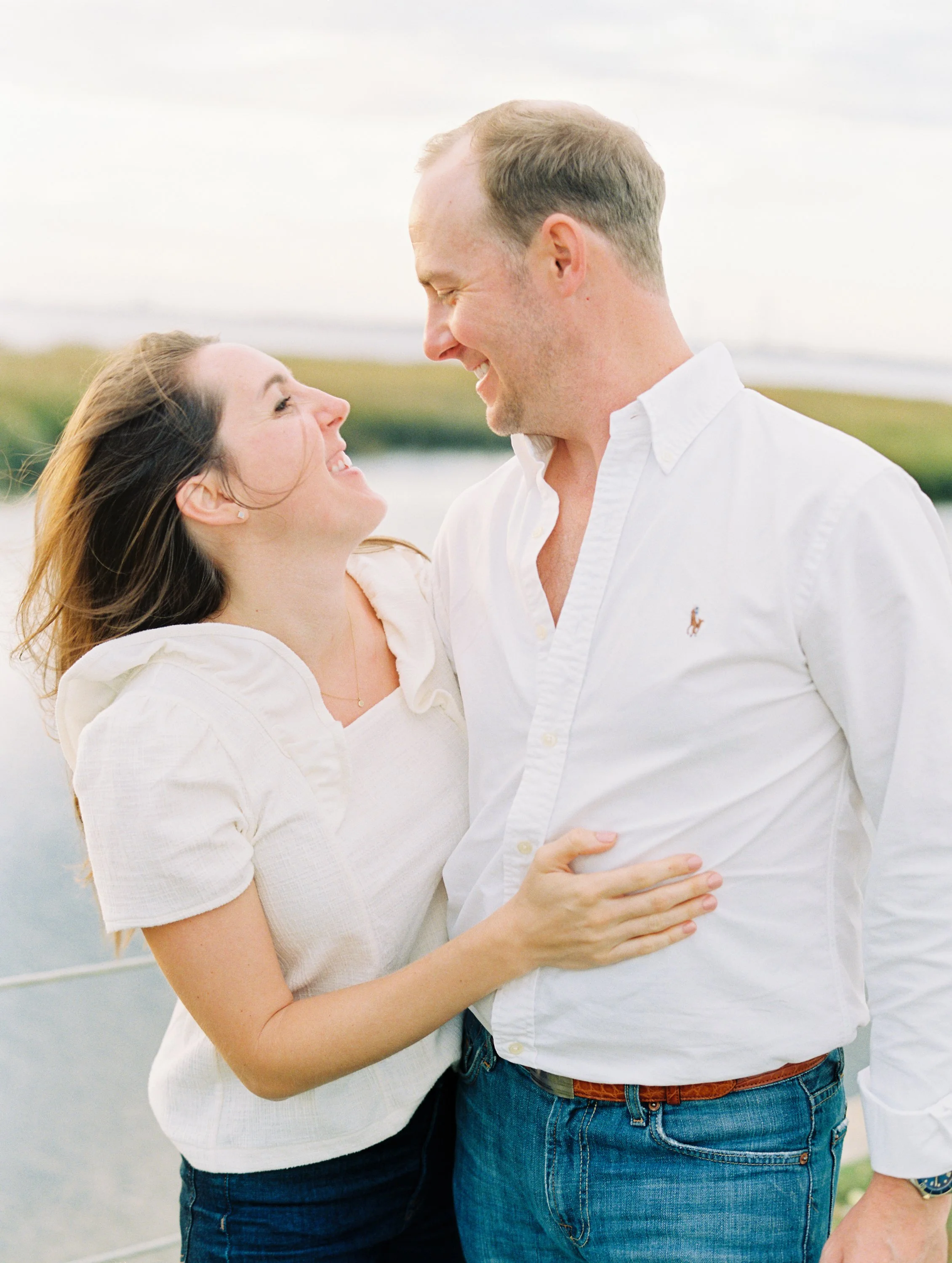
With nothing interrupting the horizon, the light becomes the defining element of the image.
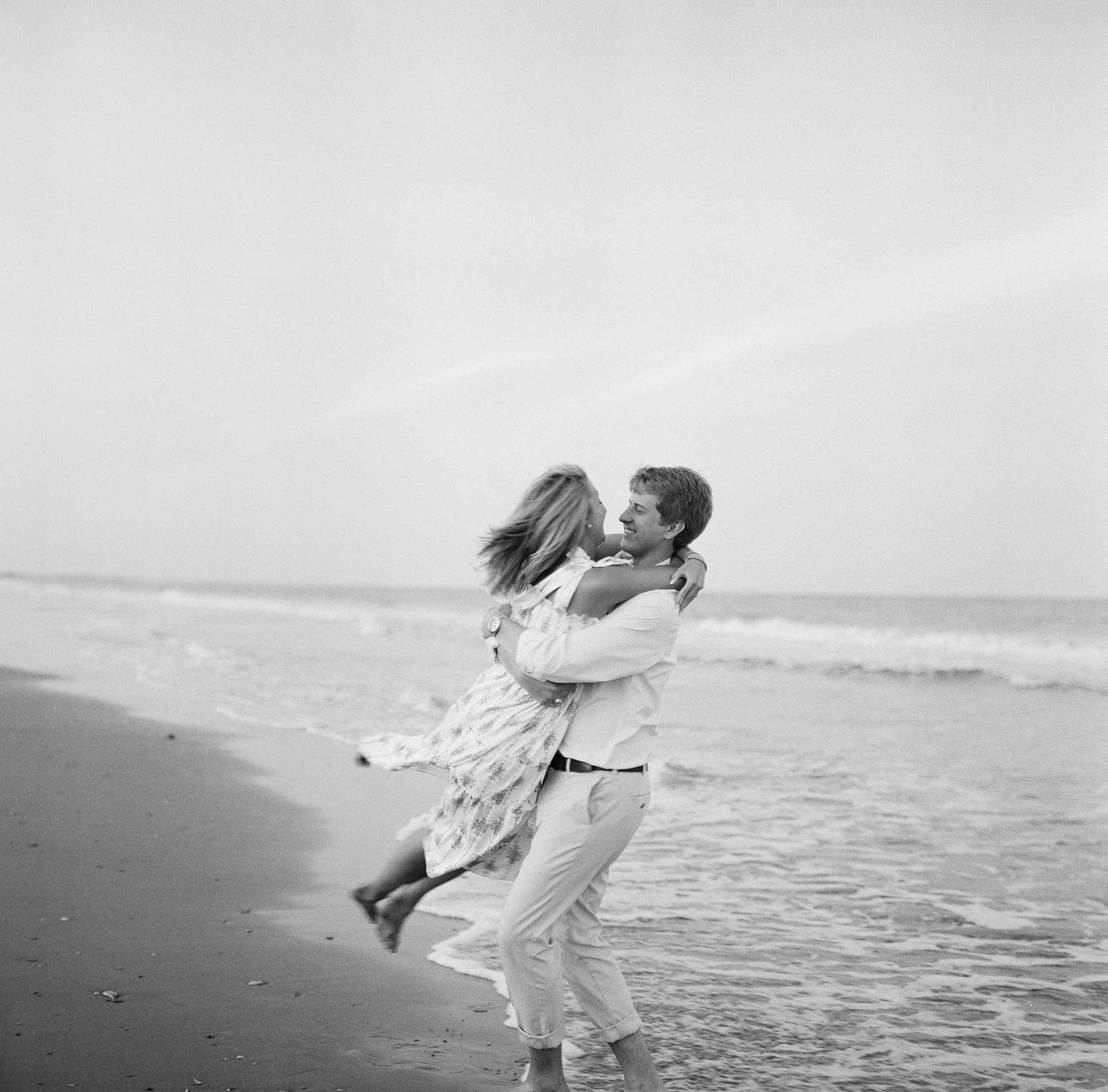
Sullivan’s Island
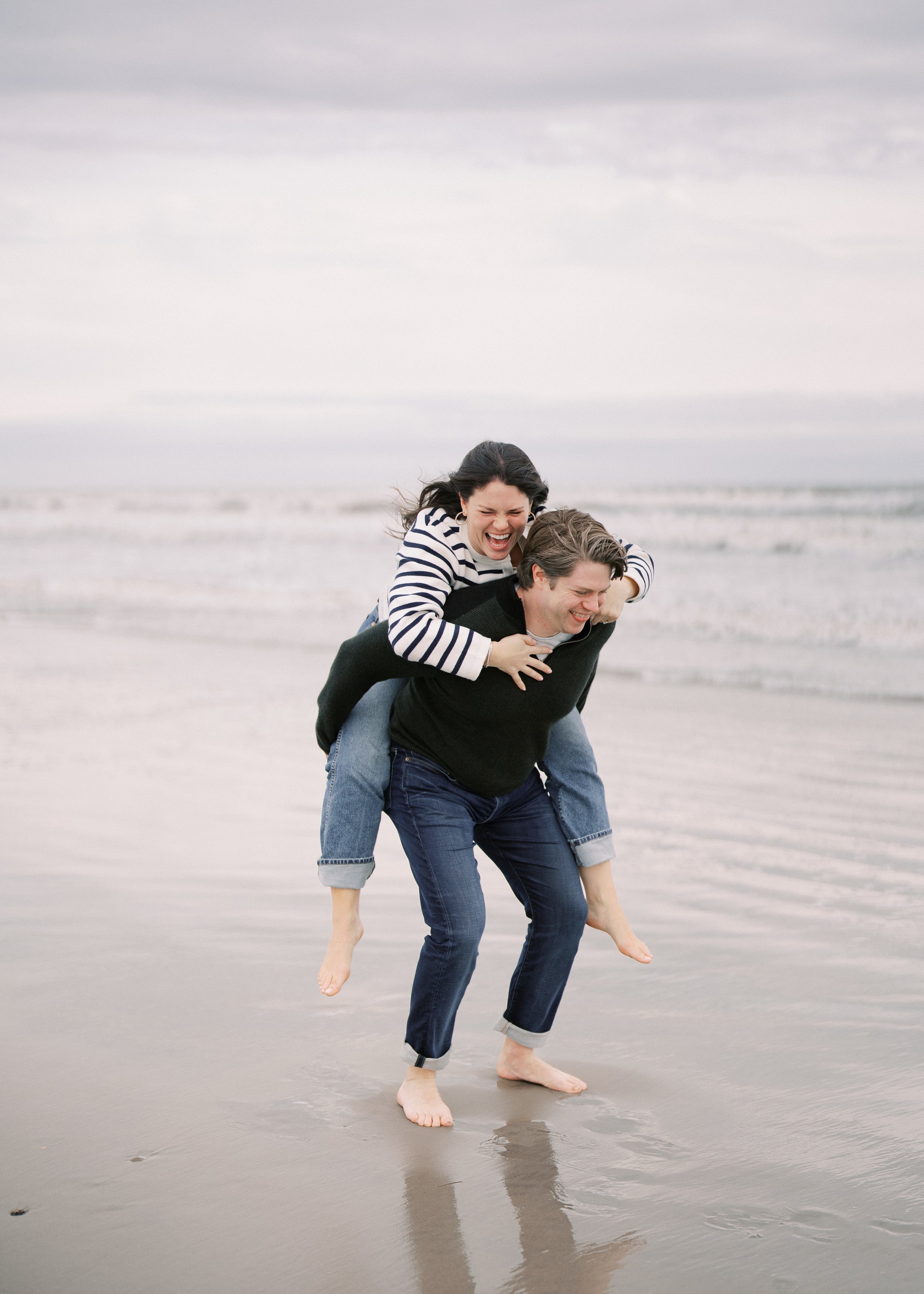
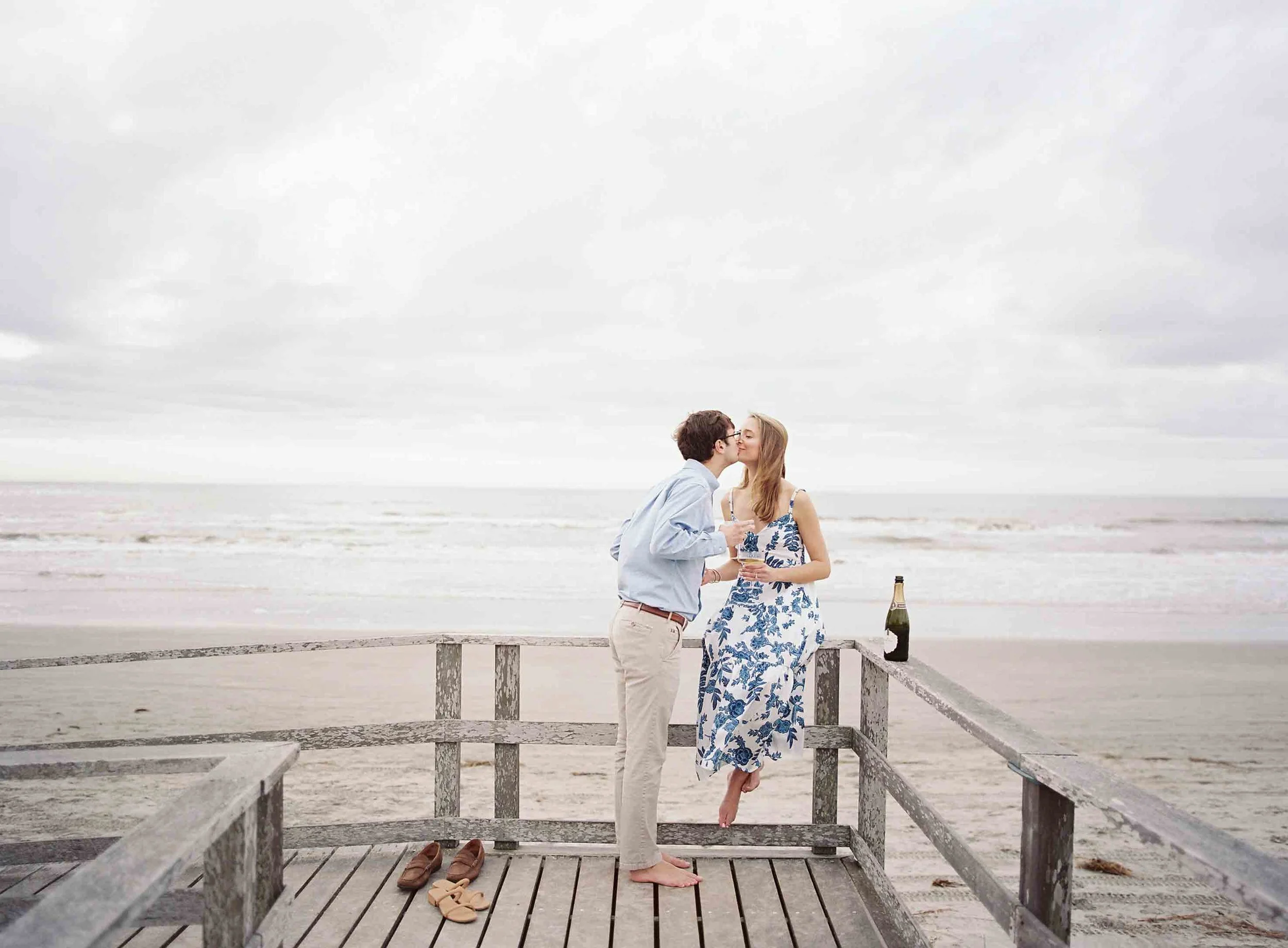
For couples drawn to a relaxed coastal setting, Sullivan’s Island offers one of the most beautiful beach environments near Charleston.
The dunes, sea grass, and wide shoreline create a natural backdrop that feels soft and organic. Many sessions begin along the quiet residential streets before moving onto the beach.
The most scenic stretches are typically near Stations 21 through 27, where the dunes create depth and texture.
Isle of Palms
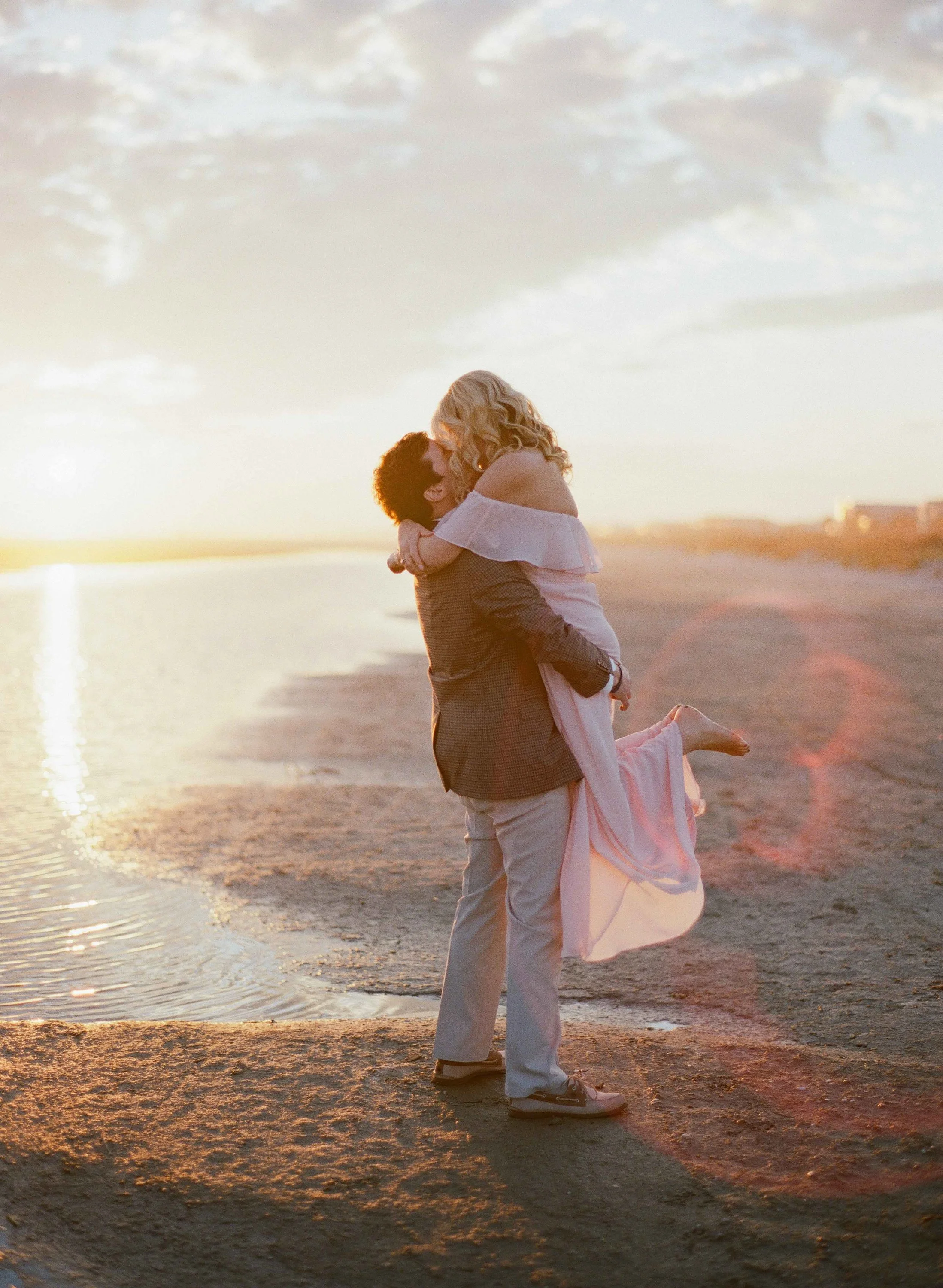
Just north of Sullivan’s Island, Isle of Palms offers a slightly wider and quieter shoreline.
The open beach and natural dunes create a relaxed atmosphere, making it ideal for couples who want something simple and effortless.
Sunset is the best time to photograph here, when the light softens and the beach becomes more still.
Kiawah Island
Cinematic, coastal, and elevated
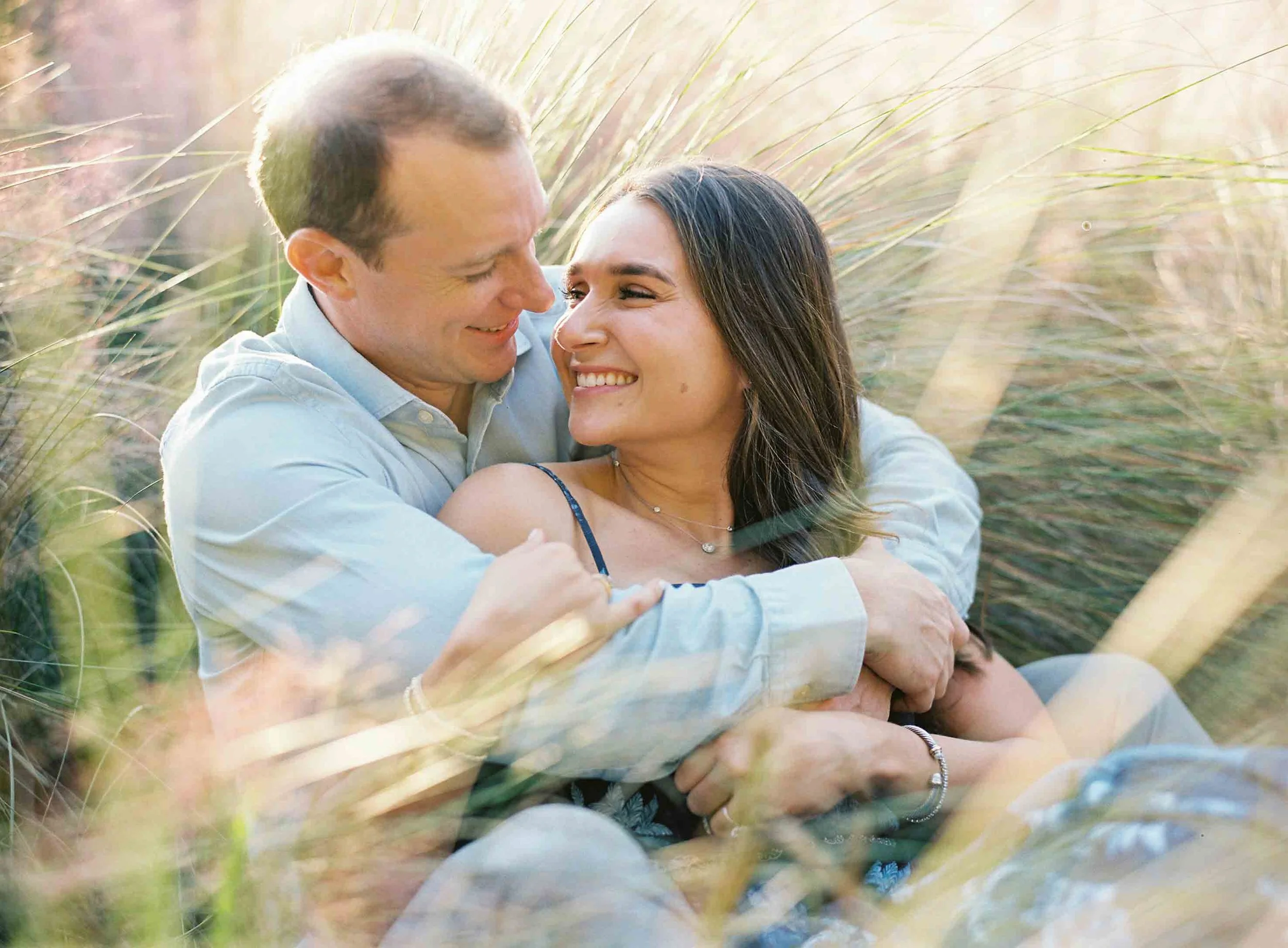
Kiawah offers some of the most striking landscapes along the South Carolina coast.
The Ocean Course feels expansive and dramatic, with sweeping ocean views, tall grasses, and boardwalk paths that create depth and movement in photographs. The light here, especially at sunset, feels almost cinematic.
Near The Sanctuary, the architecture and grounds add a more refined, polished element to the setting, while inland areas offer moss-draped oaks and quiet marsh landscapes.
Kiawah is ideal for couples who want something elevated, natural, and slightly removed from the city.
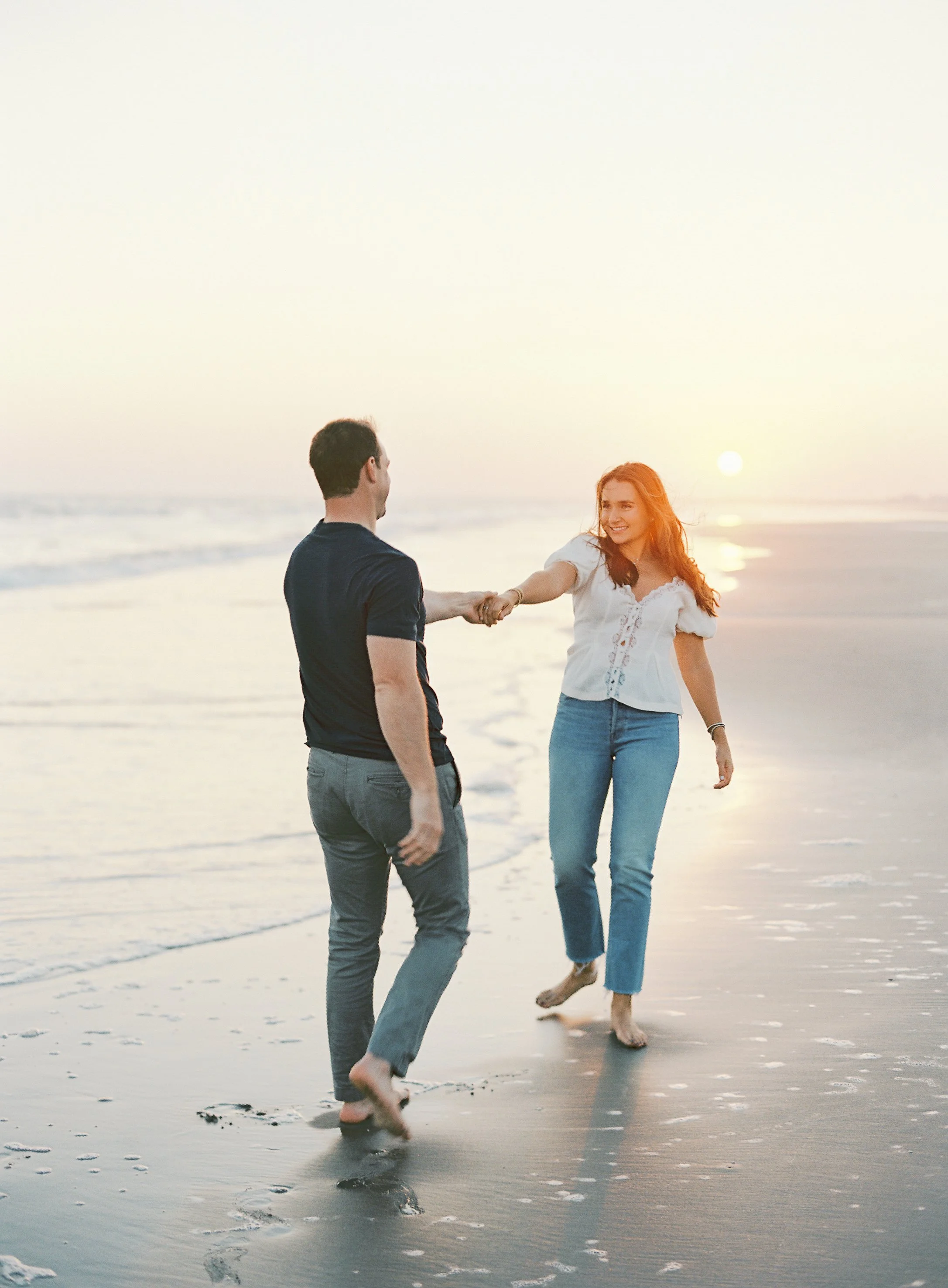
Kiawah holds scale in a way few places do — the landscape stretches, and the images follow.
How to Choose the Right Engagement Photo Location
The best location comes down to how you want your photos to feel.
For a classic Charleston look, South of Broad and the French Quarter offer historic architecture, waterfront views, and a timeless atmosphere.
For something quieter, Hampton Park or Middleton Place provide more space, greenery, and a slower pace.
For a coastal setting, Sullivan’s Island, Isle of Palms, and Kiawah offer soft light, open landscapes, and a more relaxed feel.
Many engagement sessions combine two nearby locations to create variety while keeping the experience relaxed. A session might begin in the French Quarter, move through South of Broad, and end along the coast at sunset.
Frequently Asked Questions
-
Early morning and sunset provide the softest light and quietest streets, especially in the historic district.
-
Most public streets and parks in Charleston do not require a permit for engagement sessions. Areas like White Point Garden and the historic district are typically open for portraits.
Some private locations, such as Middleton Place, do require a fee unless you are getting married there.
-
Most engagement sessions last between 60 and 90 minutes, allowing time to move between nearby locations and capture a natural variety of portraits.
Many sessions combine areas like the French Quarter with nearby streets or the Battery for a seamless flow.
-
Most couples choose outfits that complement Charleston’s historic architecture and coastal setting.
Flowing fabrics, neutral tones, and classic silhouettes tend to photograph beautifully against pastel homes, cobblestone streets, and waterfront views.
-
Most couples schedule engagement photos about 6–9 months before their wedding. This allows time to use the images for save-the-dates, wedding websites, or guest books.
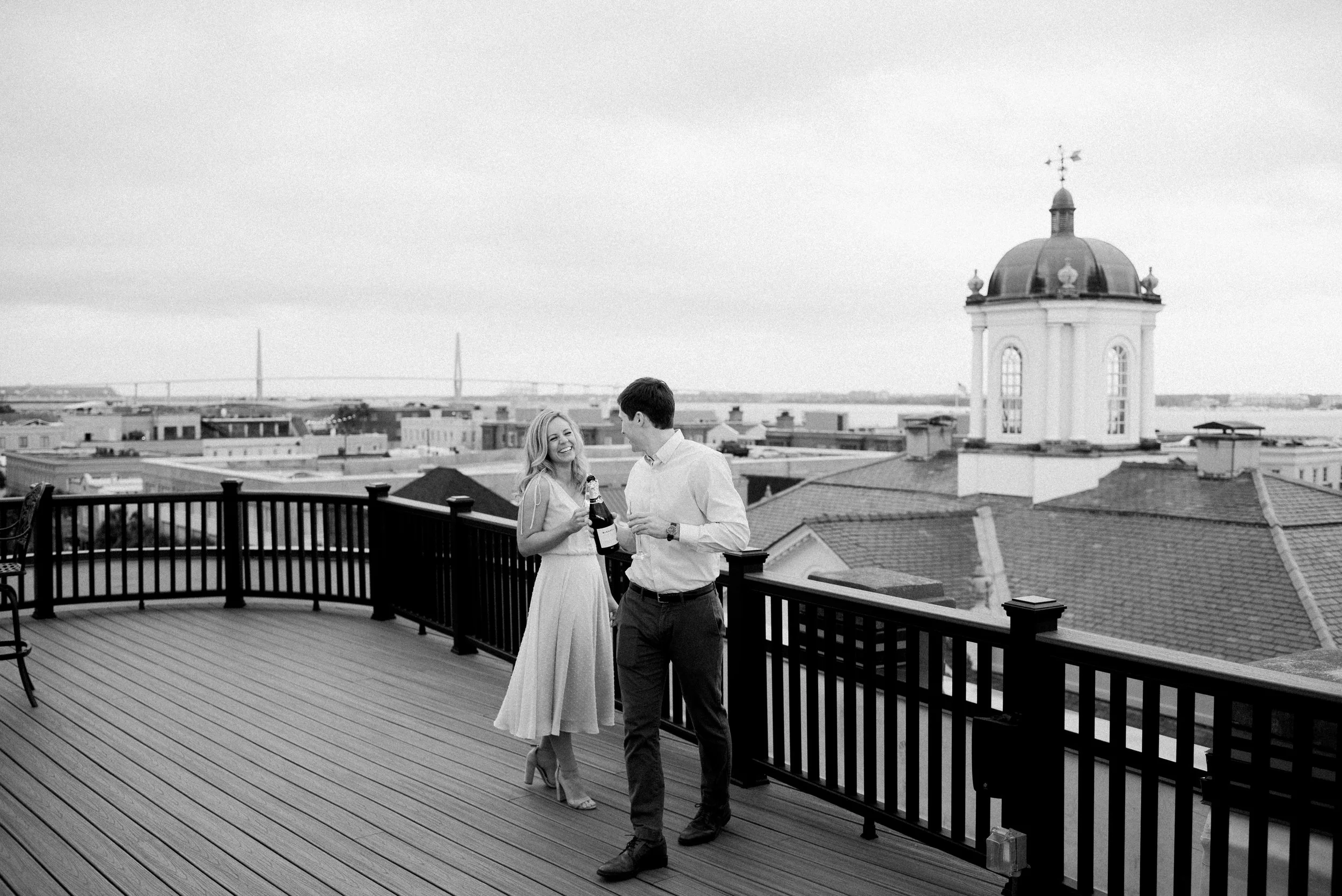
Choosing a location isn’t about having more options — it’s about knowing what will actually feel like you.
Planning Engagement Photos in Charleston?
If you’re planning engagement photos in Charleston and want something that feels effortless, natural, and true to you, I’d love to help you choose a location and create a session that reflects it.